Hello folks!
Well, it’s that time of year again; 2007 is almost at an end and, before I get round to drinking, dancing like an eejit and doing karaoke (as is my wont on New Year’s Eve), I thought I’d share with you some of my musical highlights and lowlights of the past 12 months. As was the case last year, only albums/singles that a) have been released in the past year (apologies to Cat Power, Peter, Björn and John, and The Rapture) and b) I have listened to in that time (apologies to Radiohead, who would probably have reached the Top Five had I had chance to listen to In Rainbows, and Les Savy Fav) can garner one of these, ahem, “prestigious” awards.
What is a new (and, hopefully, welcome) addition to this end-of-year review is that, in the case of featured albums (or, at the very least, the ones I have recommended, rather than those I have slated), links will be provided to both MySpace pages (for some sample tracks) and Amazon links (should you wish, having heard said tracks, to buy the album); Youtube videos will also be provided for featured singles. So sit back, relax and enjoy the 2nd annual Prof Music Awards:
Albums of the Year – The Top Ten
1. Animal Collective – Strawberry Jam: A close run thing this year (particularly given how strong the Battles album was), but this album is a joy to behold. One of the decades most influential and important bands, Animal Collective’s music has often been likened to that of Brian Wilson (both Beach Boys era and his solo stuff), but it’s arguably the spirit of eclecticism and invention which is the album’s strongest suit. There isn’t a single bad track on the album and, at its best (particularly Peacebone, #1 and closing track Derek), it is utterly beguiling. [MySpace page] [Amazon link]
2. Battles – Mirrored: In any other year (last year, for example), this album would probably have romped to victory, but the above mentioned latecomer sweeped the top gong. No matter, there’s no shame in losing out on top spot to Animal Collective, and Battles achieved something far more important in 2007: creating a truly innovative math-rock album that, unlike the albums of many of their contemporaries, is both accessible and enjoyable (Leyendecker is a particular highlight.) [MySpace page] [Amazon link]
3. Justice - †: 2007 was arguably the year that, after a few years in the doldrums, dance/electronic music fought back to reclaim dancefloors the world over from the indie kids. Of course, as with any movement/revival, there was a hell of a lot of dross released (more on that later), but there were a couple of bands that managed to elevate themselves from the rest of the crowd and produce quality albums. Most impressive were Justice, who defied their lazy critics (who dismissed them as Daft Punk imitators) to produce a sparkling album that owed as much to Judas Priest and Black Sabbath as it did to Parisian techno (D.A.N.C.E being the one notable exception.) That’s not to say that the only thing Daft Punk and Justice have in common is their Parisian roots, however; after all, † (like Homework before it) is likely to be held up as one of the landmark electronic albums. [MySpace page] [Amazon link]
4. Panda Bear – Person Pitch: A good year, this, for Noah Lennox (aka Panda Bear); not only has he, as drummer with Animal Collective, scooped the top Prof prize, but he’s also got a well-earned place in this year’s Top Five with his own solo output. What marks this album out from his previous solo outings is that, while Person Pitch shares many of the features that make Animal Collective albums such a joy to listen to, this album has a unique feel and sound to it (i.e. sounding like a Panda Bear album, rather than sounding like another Animal Collective album.) At long last, the Panda may have found his natural habitat [groan – Ed.] [MySpace page] [Amazon link]
5. LCD Soundsystem – Sound of Silver: Voted best album of the year by GU Music’s critics, but narrowly misses out on that honour in these awards. Nevertheless, this is James Murphy’s finest work to date; in the hands of a less skilled musician, songs about 30-something muso insecurities and mid-life crises would grate, but Murphy has constructed an album full of soulful, grown-up electronic music from these unpromising raw materials. Worth the cost of the album for “Get Innocuous!” alone. [MySpace page] [Amazon link]
6. M.I.A. – Kala: It’s perhaps pushing it ever so slightly to suggest (as some have) that this is an album with no weak points (I’m still not completely won over when it come to The Turn), but this album ought to finally put paid to those “Empress with no clothes” jibes and confirm M.I.A. as one of the most exciting and innovative artists around today. [MySpace page] [Amazon link]
7. Digitalism – Idealism: In a year where dance music made a dramatic resurgence, only Justice did more to light the touch paper in 2007. Like Justice, Digitalism have a healthy penchant for feeding synth sounds through guitar filters to produce invigorating, powerful dance music. At times, they can seem a little too in thrall to their idols (the Daft Punk and Kraftwerk influences are clearly evident) but Idealism should still be remembered as one of 2007’s most enjoyable, high quality albums. [MySpace page] [Amazon link]
8. The Decemberists – The Crane Wife: Qualifying by virtue of its UK release date being in January of 2007 (even though it had been released in the previous October in the States), this was one of the first albums I listened to in 2007, and even now is still one of my favourite albums of the year. This is the Decemberists first release on a major record label (Capitol Records, to be precise), and many feared (myself included) that such a label move might dilute their eccentric, folksy edge. Not a bit of it; there may be no sea shanties on this album (as there had been on Picaresque), but if anything, The Crane Wife is even more leftfield (featuring, as it does, two tracks clocking in at 10+ minutes.) Sweeter, more lilting and more melodic than a prog-folk album should rightfully sound. [MySpace page] [Amazon link]
9. Arcade Fire – Neon Bible: In a year in which most of the indie releases were infuriatingly mediocre, Canada’s finest export (after Terrance and Phillip, of course) stood out like a Belisha beacon. Neon Bible saw Arcade Fire display their more political side, with withering critiques about the war, the church, the aggressive pursuit of fame by parents for their kids, and other such cheery subjects. The sombre subject matter and the occasional tendency towards Springsteen-style grandiosity mean that this album doesn’t quite live up to the astonishingly high standard of its predecessor, but that’s hardly a disgrace, and Arcade Fire remain one of the most important bands around right now. [MySpace page] [Amazon link]
10. !!! – Myth Takes: Following on from the Rapture’s impressive “Pieces of the People We Love” album from the previous year, !!! further enhanced New York’s position as the epicentre of electrofunk with their most accomplished and accessible album to date. What is most impressive about this album is the way in which !!! have played to their strengths (i.e. by eschewing the politics and reining in Nic Offer’s histrionics, and in turn accentuating their infectious funk riffs); the result is an addictive, dancey record that puts their Nu-Rave counterparts firmly in the shade. [MySpace page] [Amazon link]
Best of the rest
• Robyn – Robyn: A pop album that one needn’t feel guilty about listening to; eclectic, inventive and intelligent. [MySpace page] [Amazon link]
• The Raveonettes – Lust, Lust, Lust: The Danish Jesus and Mary Chain acolytes have ditched the kitsch and produced, in Lust, Lust, Lust, their darkest, most ominous sounding and most accomplished album to date. [MySpace page] [Amazon link]
• Richard Hawley – Lady’s Bridge: Not quite as good as Cole’s Corner, but this romantic take on the city of Sheffield still retains much of the charm of his previous work. [MySpace page] [Amazon link]
• Maps – We Can Create: The recipient of this year’s Mercury prize in an just world; though James Chapman (chief songwriter and the man who, to all intents and purposes, is Maps) sometimes adheres to the My Bloody Valentine/Spiritualized blueprint a bit too closely, the album’s high points are just about as dreamy as shoegaze gets. [MySpace page] [Amazon link]
The Nicolas Anelka award for Most Unfairly Maligned Album of 2007
Clap Your Hands Say Yeah – Some Loud Thunder: Having come to prominence as a product of what has come to be called the “Pitchfork factor”, CYHSY are now experiencing the backlash. It’s true that Some Loud Thunder isn’t as impressive as their eponymous debut, but it’s still a good album and one which surely didn’t deserve the critical mauling it received in some sections of the music press. [MySpace page] [Amazon link]
The Ronaldinho award for Most Disappointing Album of 2007
The Go! Team – Proof of Youth: For an award such as this, it’s tempting to go for an album that’s overhyped (such as the Hold Steady’s Boys and Girls in America) or a half-hearted one by a normally excellent band (such as Air’s Pocket Symphony), but the former is lyrically excellent (even if the music does bear too much resemblance to that of the E Street Band) and the latter, while not Air’s best album, is still an exquisite sounding record (besides, the Far Eastern influences on the album at least show a band that’s prepared to evolve musically.) By contrast, the Go! Team’s latest album (while by no means a poor record) shows a band that hasn’t evolved much at all since their 2004 debut “Thunder, Lightning, Strike” (which was a much better album than Proof of Youth.) A sound that felt like a breath of fresh air when the Go! Team first emerged is starting to sound a bit like a shtick now.
The (appropriately festively monikered) Turkey of the Year 2007
Klaxons – Myths of the Near Future: A closely contested award, this one, given the release in 2007 of Simian Mobile Disco’s similarly banal “Attack, Decay, Sustain, Release”, not to mention a plethora of atrocious nu-rave releases, posh former public school students (Kate Nash and Jack Peñate, I’m looking in your direction) inflicting their Mockney affectations on an unfortunate and unsuspecting society, and, of course, a James Blunt album release. But it’s not just their Nathan Barley-esque pseudo-rave output that elevates (if that’s the right word) Klaxons to wooden spoon status (though their music is diabolical), it’s also the Johnny Borrell-like delusions of grandeur that grate (their graceless acceptance speech for a completely undeserved Mercury victory, in which they hailed themselves as having made the "most forward-thinking record of the last eight years”, was a particular nadir.) What makes it worse is the outpouring of love they’ve received from the music press; I can brush off the praise from the NME (a kind of Hello magazine for teenage indie pups), the musically disengaged broadsheets like the Times, Telegraph and Observer (who know fuck all about music anyway) and even Pitchfork (who have occasionally taken leave of their senses and swallowed the hype surrounding such hacks.) However, the cowardly volte-face of the GU music editor in allowing them to claim a No. 5 spot in their Top 50 albums of the Year (presumably at the behest of Alexis Petridis, who also knows fuck all about music) is hard to stomach (to see how they got it right first time, click here.) Not since The Strokes were at the peak of their popularity have I hated a band with as much venom (and I was vindicated when it came to the Strokes; if there’s any justice in the world, Klaxons will go the same way.)
And finally, the singles of the Year
1. M.I.A. – Jimmy: Possibly the best techno-Bollywood fusion track ever made (which is more of a compliment than it sounds, honest.) [Video]
2. Justice – D.A.N.C.E: Probably the only track from † that sounds like Discovery-era Daft Punk, but no worse for that; one of the highlights of the album (the video’s pretty good, too.)
3. Robyn – With Every Heartbeat: Thank goodness for this track in amongst all the Kate Nash’s and Umbrellas, or last summer would have been completely unbearable. [Video]
4. !!! – Heart of Hearts: Pitchfork described this track as a six minute distillation of everything that !!! do well; I think that sums it up perfectly. [Video]
5. Digitalism - Pogo: Don’t let the fact that Sky have started using it for their football coverage put you off; even by Idealism’s high standards, this is particularly high-octane stuff. [Video]
6. Battles – Atlas: Apparently inspired by schaffel (a techno offshoot made popular in the clubs of Cologne) but sounding eerily like Marc Bolan on an acid trip, this track is still both weird and wonderful in equal measure (the year’s number 1 in an alternate universe, as The Guide put it.) [Video]
Well, that’s all for 2007, folks. All that remains is for me to wish you all a happy and prosperous 2008. As ever, feel free to post your suggestions for musical highlights and lowlights of 2007 (after all, this award list, while a lengthy tome, is hardly an exhaustive account of the year’s music; you may also wish to take me to task over some of my choices in this list.) Also, look out for my mid-season European football round-up (which should be coming out after the next round of Premier League matches.)
See you all in 2008,
Liam
Monday, 31 December 2007


Sunday, 2 December 2007
Euro 2008 draw: Minute-by-minute
11am: Hello folks, and welcome to live minute-by-minute coverage of the Euro 2008 draw. Any comments/questions/abuse can be directed to my inbox at liamdavidodonnell@hotmail.co.uk.
Pre-amble: First of all, while we're waiting for the real action to begin, let's pause for a minute to pay our respects to those who have not made it. 2008's edition will be a Home Nations-lite edition, which is, of course, a great tragedy. Think about it: no long -ball football, no mention of destiny pre-determining English supremacy at a major tournament. And let's think also of all the lost revenue at all those WAG-free boutiques and fan-free bars, of all the chairs and tables that won't be lobbed across city squares, all the fountains that won't be urinated in. (What a waste...)
11:11: Now presenting the only Scot that will make an appearance anywhere near the tournament, David Taylor (former SFA chief and current UEFA general secretary.) He says the draw will never be exciting as the football (he can't have seen Switzerland-Ukraine in last year's World Cup.)
11:15: Things I'm looking forward to in Euro 2008:
a) No WAGS
b) No flags
c) No England training coverage
d) Matches featuring non-Home Nations sides not being treated as mere sideshows
e) Being able to follow my ancestral past and cheer on the Poles (even as they crash out of the tournament without a single point.)
f) AC Jimbo and his pod friends (Barry's Big-Ron style butcherings of assorted foreign languages will again be hilarious, I'm sure.)
Things I'm dreading:
a) Motty banging on about the War if Germany are drawn with Poland or the Czechs
b) Motty full stop
c) Clive Tyldesley resurrecting that lame Mutu-Pokemon gag given Romania's presence at the finals.
d) Complaints from the press and fans that "it's just not the same without England" (you're right, it's better.)
e) Another Greece victory (at least if they play as negatively as last time.)
11:23: Roger Federer and Hermann Meier are now taking us on a guided tour of the Swiss and Austrian venues (cue this column's face going green with envy at not being able to go.)
11: 25: A quick aside to talk about the possibility of a Group Of Death (TM): Raymond Domenech has been complaining (not unjustifiably) about the bizarre seeding policy which could end up producing a group containing Holland, Italy, Germany and France (personally, I don't know why Domenech is afraid of facing a Dutch side that lost in Romania and could only beat Luxembourg 1-0 at home, but there you go.) On a serious note, though, the Grauniad's staff and agencies claim that France's 4th seeding is due to their relatively poor qualifying results for Germany 2006 and Austria/Switzerland 2008, but France have also had much tougher groups than, say, Sweden, Czech Republic and Holland, so results are bound to be poorer with that in mind.
11:30: I've noticed that there have been a lot of choral/operatic performances at this draw (not that UEFA are ones to trade in stereotypes related to a tournament taking place in Central Europe, of course.)
11:35: Still lots of dignitaries congratulating each othzzzzzzz................ Oh, the planning for the tournament is going well, the hosts will be very welcomizzzzzzzzz...........
11:37: Getting closer now: Giovanni Ivantino (deputy general secretary of UEFA) is explaining the technicalities (the Swiss will be in Group A, and the Austrians will be in B.) Domenech has yet to anrgily decry the rules determining seeding yet (will let you know if he's evicted.)
11:40: It's starting: Peter Schmeichel has drawn ... HOLLAND. They will be in Group C.
11:41: That leaves: GREECE in Group D.
11:42: In group A, we will have.... TURKEY in Group A with the Swiss (talk turns to the battle of Istanbul.) They will be in position A4 in the Group.
11:43: Yay! POLAND have the Austrians in Group B. And they are in position B4.
11:44: And FRANCE have Holland! It's happened! A Group of Death is developing! And they will be in position C4.
11:45: Last ball of the bottom seeds, and it's RUSSIA (obviously.) And they'll be D4.
11:46: There's still hope for the French; they should be able to beat Sweden and the Czechs.
11:47: PORTUGAL will be in Group A (easy ride for Scolari, then.) And they're A3 (Portugal will open with Turkey.)
11:48: GERMANY will play Austria (we have a nice derby there, and "Big Gay" Jogi must be delighted with that.) Oh no, Germany will play Poland (please, BBC, don't take that game and give it to Motson.)
11:49: ROMANIA will be in C with France and Holland (could have been worse for France and the Dutch, but this still looks like the toughest group.)
11:50: SPAIN will be in D (they won't relish playing Greece again, given what happened last time.)
11:51: And playing the Swiss in the opening game will be ... CZECH REPUBLIC. Sorry, can't be bothered allocated group positions any more.
11:52: CROATIA; their fortune continues (they have the Austrians in B.) And Germany avoid Italy (they'll be thrilled with that.)
11:53: ITALY! The Group of Death has unfurled in C!
11:55: Last of all, SWEDEN dodge a bullet by being drawn with Spain, Greece and Russia in D.
So, to confirm, the draw is as follows:
A. SWITZERLAND
CZECH REPUBLIC
PORTUGAL
TURKEY
B. AUSTRIA
CROATIA
GERMANY
POLAND
C. HOLLAND
ITALY
ROMANIA
FRANCE
D. GREECE
SWEDEN
SPAIN
RUSSIA
Well, France and Italy (two of Europe's better sides technically) have every right to feel aggrieved with that draw, as do Romania (a useful side who would probably qualify from any other group): what odds on the top seeded side, Holland, propping up the group? Meanwhile Germany have been gifted a Group of Life (Croatia should join Germany in the knockouts but Poland may have an outside chance; Austria should still perform abysmally, despite the draw being quite kind to them.) Russia should be out of their depth in D (Spain should qualfy without too many problems, but Greece could well edge a somewhat Zlatan Ibrahimovic-dependent Sweden.) Meanwhile, Switzerland could well be the host that does well in this tournament; they are quite a solid side with one or two decent attackers, and ought to edge a ropey Turkey side and a transitional Czech side to join Portugal in the knockouts (the Portuguese, meanwhile, should be thanking their lucky stars that, despite being so mediocre recently, they've been gifted an easily negotiable group phase.)
That's all for now folks. See you soon.
Liam
Pre-amble: First of all, while we're waiting for the real action to begin, let's pause for a minute to pay our respects to those who have not made it. 2008's edition will be a Home Nations-lite edition, which is, of course, a great tragedy. Think about it: no long -ball football, no mention of destiny pre-determining English supremacy at a major tournament. And let's think also of all the lost revenue at all those WAG-free boutiques and fan-free bars, of all the chairs and tables that won't be lobbed across city squares, all the fountains that won't be urinated in. (What a waste...)
11:11: Now presenting the only Scot that will make an appearance anywhere near the tournament, David Taylor (former SFA chief and current UEFA general secretary.) He says the draw will never be exciting as the football (he can't have seen Switzerland-Ukraine in last year's World Cup.)
11:15: Things I'm looking forward to in Euro 2008:
a) No WAGS
b) No flags
c) No England training coverage
d) Matches featuring non-Home Nations sides not being treated as mere sideshows
e) Being able to follow my ancestral past and cheer on the Poles (even as they crash out of the tournament without a single point.)
f) AC Jimbo and his pod friends (Barry's Big-Ron style butcherings of assorted foreign languages will again be hilarious, I'm sure.)
Things I'm dreading:
a) Motty banging on about the War if Germany are drawn with Poland or the Czechs
b) Motty full stop
c) Clive Tyldesley resurrecting that lame Mutu-Pokemon gag given Romania's presence at the finals.
d) Complaints from the press and fans that "it's just not the same without England" (you're right, it's better.)
e) Another Greece victory (at least if they play as negatively as last time.)
11:23: Roger Federer and Hermann Meier are now taking us on a guided tour of the Swiss and Austrian venues (cue this column's face going green with envy at not being able to go.)
11: 25: A quick aside to talk about the possibility of a Group Of Death (TM): Raymond Domenech has been complaining (not unjustifiably) about the bizarre seeding policy which could end up producing a group containing Holland, Italy, Germany and France (personally, I don't know why Domenech is afraid of facing a Dutch side that lost in Romania and could only beat Luxembourg 1-0 at home, but there you go.) On a serious note, though, the Grauniad's staff and agencies claim that France's 4th seeding is due to their relatively poor qualifying results for Germany 2006 and Austria/Switzerland 2008, but France have also had much tougher groups than, say, Sweden, Czech Republic and Holland, so results are bound to be poorer with that in mind.
11:30: I've noticed that there have been a lot of choral/operatic performances at this draw (not that UEFA are ones to trade in stereotypes related to a tournament taking place in Central Europe, of course.)
11:35: Still lots of dignitaries congratulating each othzzzzzzz................ Oh, the planning for the tournament is going well, the hosts will be very welcomizzzzzzzzz...........
11:37: Getting closer now: Giovanni Ivantino (deputy general secretary of UEFA) is explaining the technicalities (the Swiss will be in Group A, and the Austrians will be in B.) Domenech has yet to anrgily decry the rules determining seeding yet (will let you know if he's evicted.)
11:40: It's starting: Peter Schmeichel has drawn ... HOLLAND. They will be in Group C.
11:41: That leaves: GREECE in Group D.
11:42: In group A, we will have.... TURKEY in Group A with the Swiss (talk turns to the battle of Istanbul.) They will be in position A4 in the Group.
11:43: Yay! POLAND have the Austrians in Group B. And they are in position B4.
11:44: And FRANCE have Holland! It's happened! A Group of Death is developing! And they will be in position C4.
11:45: Last ball of the bottom seeds, and it's RUSSIA (obviously.) And they'll be D4.
11:46: There's still hope for the French; they should be able to beat Sweden and the Czechs.
11:47: PORTUGAL will be in Group A (easy ride for Scolari, then.) And they're A3 (Portugal will open with Turkey.)
11:48: GERMANY will play Austria (we have a nice derby there, and "Big Gay" Jogi must be delighted with that.) Oh no, Germany will play Poland (please, BBC, don't take that game and give it to Motson.)
11:49: ROMANIA will be in C with France and Holland (could have been worse for France and the Dutch, but this still looks like the toughest group.)
11:50: SPAIN will be in D (they won't relish playing Greece again, given what happened last time.)
11:51: And playing the Swiss in the opening game will be ... CZECH REPUBLIC. Sorry, can't be bothered allocated group positions any more.
11:52: CROATIA; their fortune continues (they have the Austrians in B.) And Germany avoid Italy (they'll be thrilled with that.)
11:53: ITALY! The Group of Death has unfurled in C!
11:55: Last of all, SWEDEN dodge a bullet by being drawn with Spain, Greece and Russia in D.
So, to confirm, the draw is as follows:
A. SWITZERLAND
CZECH REPUBLIC
PORTUGAL
TURKEY
B. AUSTRIA
CROATIA
GERMANY
POLAND
C. HOLLAND
ITALY
ROMANIA
FRANCE
D. GREECE
SWEDEN
SPAIN
RUSSIA
Well, France and Italy (two of Europe's better sides technically) have every right to feel aggrieved with that draw, as do Romania (a useful side who would probably qualify from any other group): what odds on the top seeded side, Holland, propping up the group? Meanwhile Germany have been gifted a Group of Life (Croatia should join Germany in the knockouts but Poland may have an outside chance; Austria should still perform abysmally, despite the draw being quite kind to them.) Russia should be out of their depth in D (Spain should qualfy without too many problems, but Greece could well edge a somewhat Zlatan Ibrahimovic-dependent Sweden.) Meanwhile, Switzerland could well be the host that does well in this tournament; they are quite a solid side with one or two decent attackers, and ought to edge a ropey Turkey side and a transitional Czech side to join Portugal in the knockouts (the Portuguese, meanwhile, should be thanking their lucky stars that, despite being so mediocre recently, they've been gifted an easily negotiable group phase.)
That's all for now folks. See you soon.
Liam
Saturday, 1 December 2007
A few musical musings
Hello folks,
Well, it’s been a few weeks since my last posting (on the subject of Euro 2008, though more on that in a second), and much has happened in the musical world in the intervening period (well, that has been of interest to me, anyway) so I thought I’d share with you some of my highlights and lowlights from the past month…
First up, it’s one of my personal favourite artists of all time, part of the best songwriting partnership of all time (along with Johnny Marr) in the best band of all time (The Smiths), and a man who’s penned a fair few decent songs on his own; yup, it’s Moz. Alas, he’s been doing what he does worst this past week: dabbling in issues race and migration, declaring that “the gates of Britain have been flooded” and prompting the all-too-predictable “Bigmouth strikes again” headlines on the front cover of the NME (for anyone unfamiliar with this publication, the NME is the music press equivalent of the Sun.) Now, it has been alleged by Morrissey’s manager that the contents of the interview had been heavily doctored by NME editor (and the man to blame for the inexorable rise of the moronic nu-rave fad) Conor McNicholas in order to cast himself as a “hero” in the fight against racism (at a time when the NME is doing much to highlight the Love Music Hate Racism cause), while simultaneously casting Morrissey as a bigoted, right-wing thug. Knowing the NME, such a scenario would perhaps not surprise me, and it’s also true that the interviewer Tim Jonze was so incensed by the re-working of the piece that he wanted his name removed from all but the Q&A section. The trouble is, though, that (and as a fan of his work, particularly with the Smiths, it pains me to say it) Morrissey has plenty of previous in this respect; not only does the content of the interview sound alarmingly similar to Enoch Powell’s rightly-decried “Rivers of Blood” speech, but Morrissey has also in the past described reggae music as “vile”, walked out on stage at Finsbury Park draped in a Union Jack (at a gig people knew National Front members were likely to gatecrash) and also penned the song “Bengali In Platforms” (a thinly-veiled reference to British Muslims, containing the lyric “Life’s so very hard when you belong here.”) It’s also been correctly pointed out that it’s a bit rich of Morrissey to be bemoaning supposed “mass migration” as a Mancunian of Irish immigrant extraction. The sad fact is that, while Moz is easy to love because of his impressive back-catalogue, he is just as easy to despise because of his repugnant views, not least his pining for a Britain that ceased to exist at least 50 years ago.
Next, it’s some news of a much more pleasant nature: My Bloody Valentine are the latest group to announce they’re making a comeback (and, given that the past 18 months or so has seen the return of Take That, The Spice Girls and Duran Duran, arguably the most welcome, too.) Not only are they touring again (alas, only three gigs have been announced so far, all of which were at inconvenient dates, and which sold far too quickly for me to get hold of a ticket anyway) but they have also announced that they will be releasing a follow-up to their masterpiece Loveless some time in 2008 (which would otherwise not be particularly unusual or newsworthy, except that Loveless was released in 1991.) I must admit to being a little bit apprehensive about the new MBV album, as I know I’ll end up comparing it with Loveless (my fear is that it just won’t be quite as good as its predecessor.) One also wonders what the motivation is behind the decision to release a new album (after all, they’ve already assured themselves a place in the pantheon of greats, having released one of the essential albums.) Nonetheless, I’m still looking forward to its release.
And finally, some, ahem, “eye candy”; recently, I was reminded of the subject of bizarre music videos by the footage accompanying two recent single releases. Firstly, the video to Simian Mobile Disco’s most recent release “Hustler”, hyped by the NME (them again) as the “sickest music video ever”, which is bizarre considering that, much like their musical output, it isn’t even the most original, given that it blatantly rips off the video to Aphex Twin’s Windowlicker (both a better song and a better video.) Mind you, this is the band that featured a number of girls each other kissing for four minutes straight in the original video for this song, so perhaps it would have been foolish to expect better. Via the Guardian’s music pages, I was also directed to the video for !!!’s most recent single “Yadnus” which features, among other things, singing roadkill (nice.) My personal vote for the most bizarre music video of all time would have to be Windowlicker, but if anyone has any suggestions, feel free to mention them here.
Later,
Liam
P.S. Barring any technical problems, I’ll be attempting to take on the likes of Barry Glendenning et. al. at their own game, by offering minute-by-minute coverage of the Euro 2008 draw as it happens. If you can stomach that, join me tomorrow from 11:30am GMT (think of it as me watching UEFA suits trot out tired platitudes and present reams of meaningless video footage, so that you don’t have to.)
Well, it’s been a few weeks since my last posting (on the subject of Euro 2008, though more on that in a second), and much has happened in the musical world in the intervening period (well, that has been of interest to me, anyway) so I thought I’d share with you some of my highlights and lowlights from the past month…
First up, it’s one of my personal favourite artists of all time, part of the best songwriting partnership of all time (along with Johnny Marr) in the best band of all time (The Smiths), and a man who’s penned a fair few decent songs on his own; yup, it’s Moz. Alas, he’s been doing what he does worst this past week: dabbling in issues race and migration, declaring that “the gates of Britain have been flooded” and prompting the all-too-predictable “Bigmouth strikes again” headlines on the front cover of the NME (for anyone unfamiliar with this publication, the NME is the music press equivalent of the Sun.) Now, it has been alleged by Morrissey’s manager that the contents of the interview had been heavily doctored by NME editor (and the man to blame for the inexorable rise of the moronic nu-rave fad) Conor McNicholas in order to cast himself as a “hero” in the fight against racism (at a time when the NME is doing much to highlight the Love Music Hate Racism cause), while simultaneously casting Morrissey as a bigoted, right-wing thug. Knowing the NME, such a scenario would perhaps not surprise me, and it’s also true that the interviewer Tim Jonze was so incensed by the re-working of the piece that he wanted his name removed from all but the Q&A section. The trouble is, though, that (and as a fan of his work, particularly with the Smiths, it pains me to say it) Morrissey has plenty of previous in this respect; not only does the content of the interview sound alarmingly similar to Enoch Powell’s rightly-decried “Rivers of Blood” speech, but Morrissey has also in the past described reggae music as “vile”, walked out on stage at Finsbury Park draped in a Union Jack (at a gig people knew National Front members were likely to gatecrash) and also penned the song “Bengali In Platforms” (a thinly-veiled reference to British Muslims, containing the lyric “Life’s so very hard when you belong here.”) It’s also been correctly pointed out that it’s a bit rich of Morrissey to be bemoaning supposed “mass migration” as a Mancunian of Irish immigrant extraction. The sad fact is that, while Moz is easy to love because of his impressive back-catalogue, he is just as easy to despise because of his repugnant views, not least his pining for a Britain that ceased to exist at least 50 years ago.
Next, it’s some news of a much more pleasant nature: My Bloody Valentine are the latest group to announce they’re making a comeback (and, given that the past 18 months or so has seen the return of Take That, The Spice Girls and Duran Duran, arguably the most welcome, too.) Not only are they touring again (alas, only three gigs have been announced so far, all of which were at inconvenient dates, and which sold far too quickly for me to get hold of a ticket anyway) but they have also announced that they will be releasing a follow-up to their masterpiece Loveless some time in 2008 (which would otherwise not be particularly unusual or newsworthy, except that Loveless was released in 1991.) I must admit to being a little bit apprehensive about the new MBV album, as I know I’ll end up comparing it with Loveless (my fear is that it just won’t be quite as good as its predecessor.) One also wonders what the motivation is behind the decision to release a new album (after all, they’ve already assured themselves a place in the pantheon of greats, having released one of the essential albums.) Nonetheless, I’m still looking forward to its release.
And finally, some, ahem, “eye candy”; recently, I was reminded of the subject of bizarre music videos by the footage accompanying two recent single releases. Firstly, the video to Simian Mobile Disco’s most recent release “Hustler”, hyped by the NME (them again) as the “sickest music video ever”, which is bizarre considering that, much like their musical output, it isn’t even the most original, given that it blatantly rips off the video to Aphex Twin’s Windowlicker (both a better song and a better video.) Mind you, this is the band that featured a number of girls each other kissing for four minutes straight in the original video for this song, so perhaps it would have been foolish to expect better. Via the Guardian’s music pages, I was also directed to the video for !!!’s most recent single “Yadnus” which features, among other things, singing roadkill (nice.) My personal vote for the most bizarre music video of all time would have to be Windowlicker, but if anyone has any suggestions, feel free to mention them here.
Later,
Liam
P.S. Barring any technical problems, I’ll be attempting to take on the likes of Barry Glendenning et. al. at their own game, by offering minute-by-minute coverage of the Euro 2008 draw as it happens. If you can stomach that, join me tomorrow from 11:30am GMT (think of it as me watching UEFA suits trot out tired platitudes and present reams of meaningless video footage, so that you don’t have to.)
Saturday, 13 October 2007
Euro trippin'
Hello folks!
Well, another round of Euro 2008 qualifiers is upon us. But rather than do as much of the myopic English press seem to have done (i.e. pour over the minutiae of what will surely be another stultifyingly boring but comfortably attained 1-0 win for England, as critiqued excellently here), I would prefer to talk about a far more compelling group, one with genuine intrigue and excitement. That is, of course, Group B, where those young Scottish upstarts have managed to stay in contention for a place in Austria/Switzerland (so much so that they can now, apparently, “taste the Toblerone”), climbing to the top of the group and threatening to put one of the two World Cup finalists (Italy and France) out of the tournament. While there has inevitably been a great deal of bluster in the press on both sides of the border, my suspicion is that it will ultimately end in disappointment. For one thing, the run-in for Scotland is by some distance the hardest of the three teams (at home to Ukraine on Saturday, followed by an away trip to Georgia this Wednesday and a showdown with Italy at Hampden in November.) As Ukraine have not yet been mathematically eliminated, the first of those three games presents obvious difficulties (i.e. a full strength Ukraine side, though Shevchenko’s struggles at Stamford Bridge will be a definite fillip for the Scots) and will demand another exceptional performance (and I’m not sure that, even for all the recent improvements in the Scottish game and the recent results that Scottish sides have been achieving, the talent pool is yet deep enough to reproduce more performances like the two they produced at home and away to France.) Meanwhile, an away trip to Georgia has, in recent years, been the type of fixture that has proved Scotland’s undoing, while Italy are the world champions (albeit a stuttering set of world champions.) Feasibly, Scotland could drop points in all three (though, despite the fears of Kevin McCarra et al, the Georgia game is really one they ought to win), which will almost certainly not be good enough.
By contrast, France have a rather straightforward run-in, with games against the Faroe Islands (away) and Lithuania (home) in the next four days, followed by a trip to Ukraine next month. The first two fixture are pretty much dead rubbers (anyone who says “there are no easy fixtures in international football anymore” is talking bollocks), while France are likely to be taking on an already-eliminated (and, possibly, somewhat weakened and slightly de-motivated) Ukraine next month, so one would expect a maximum nine points and passage to Euro 2008. If either of the two big guns ought to be concerned, it should probably be the Azzurri, who ought to beat Georgia at home in their next match (and, indeed, the Faroes at home in their final match), but who could be facing a potentially decisive trip to Hampden in November. Given that Scotland will probably still be in contention at that point, and that Italian sides are often rattled by the ferocity of some British crowds and the “Anglo-Saxon” style of play, disaster could ensue for Donadoni’s side. My feeling, though, is that they may just squeak a draw and get through that way. Even if Scotland do miss out, though, the disappointment shouldn’t be too overwhelming, or sustained for that long, as their extremely credible performance in the group is likely to have significantly boosted their FIFA/UEFA co-efficient (or something); as a result, they ought to get a much kinder qualifying group for the World Cup in South Africa in 2010 and, quite possibly, for Poland/Ukraine 2012. Coupled with the recent technical and tactical improvements in the Scottish game, there’s a fair chance that we could be seeing the gregarious but good-natured Tartan Army at both of those tournaments.
Well, that’s all for now, everyone. Just enough time to round up some of the other interesting bits from this weekend’s round of fixtures, and make another set of rubbish predictions (because it’s been so long since I last made any):
• Germany to register a comfortable win (2-0, probably) over a mediocre Ireland side (whose long-ball tactics make Sam Allardyce’s sides look positively progressive); having secured their qualification, the Mannschaft will relax and allow the Czechs to secure the point(s) they need.
• Denmark to come roaring back into Group F contention by beating Spain (thus heaping more pressure on La Fúria Roja’s clueless, simian coach.)
• Romania and Holland to play out a draw that does Bulgaria no good.
• Poland to all but secure qualification by beating Kazakhstan at home, and Finland & Portugal to keep on winning (that Portugal-Finland showdown on November 21st looks tasty…)
• Same situation in Group B as in A, with Poland, Finland and Portugal substituted for Greece, Norway and Turkey respectively (their group’s decisive showdown is between Norway and Turkey on November 17th, by the way.)
See you all later,
Liam
Well, another round of Euro 2008 qualifiers is upon us. But rather than do as much of the myopic English press seem to have done (i.e. pour over the minutiae of what will surely be another stultifyingly boring but comfortably attained 1-0 win for England, as critiqued excellently here), I would prefer to talk about a far more compelling group, one with genuine intrigue and excitement. That is, of course, Group B, where those young Scottish upstarts have managed to stay in contention for a place in Austria/Switzerland (so much so that they can now, apparently, “taste the Toblerone”), climbing to the top of the group and threatening to put one of the two World Cup finalists (Italy and France) out of the tournament. While there has inevitably been a great deal of bluster in the press on both sides of the border, my suspicion is that it will ultimately end in disappointment. For one thing, the run-in for Scotland is by some distance the hardest of the three teams (at home to Ukraine on Saturday, followed by an away trip to Georgia this Wednesday and a showdown with Italy at Hampden in November.) As Ukraine have not yet been mathematically eliminated, the first of those three games presents obvious difficulties (i.e. a full strength Ukraine side, though Shevchenko’s struggles at Stamford Bridge will be a definite fillip for the Scots) and will demand another exceptional performance (and I’m not sure that, even for all the recent improvements in the Scottish game and the recent results that Scottish sides have been achieving, the talent pool is yet deep enough to reproduce more performances like the two they produced at home and away to France.) Meanwhile, an away trip to Georgia has, in recent years, been the type of fixture that has proved Scotland’s undoing, while Italy are the world champions (albeit a stuttering set of world champions.) Feasibly, Scotland could drop points in all three (though, despite the fears of Kevin McCarra et al, the Georgia game is really one they ought to win), which will almost certainly not be good enough.
By contrast, France have a rather straightforward run-in, with games against the Faroe Islands (away) and Lithuania (home) in the next four days, followed by a trip to Ukraine next month. The first two fixture are pretty much dead rubbers (anyone who says “there are no easy fixtures in international football anymore” is talking bollocks), while France are likely to be taking on an already-eliminated (and, possibly, somewhat weakened and slightly de-motivated) Ukraine next month, so one would expect a maximum nine points and passage to Euro 2008. If either of the two big guns ought to be concerned, it should probably be the Azzurri, who ought to beat Georgia at home in their next match (and, indeed, the Faroes at home in their final match), but who could be facing a potentially decisive trip to Hampden in November. Given that Scotland will probably still be in contention at that point, and that Italian sides are often rattled by the ferocity of some British crowds and the “Anglo-Saxon” style of play, disaster could ensue for Donadoni’s side. My feeling, though, is that they may just squeak a draw and get through that way. Even if Scotland do miss out, though, the disappointment shouldn’t be too overwhelming, or sustained for that long, as their extremely credible performance in the group is likely to have significantly boosted their FIFA/UEFA co-efficient (or something); as a result, they ought to get a much kinder qualifying group for the World Cup in South Africa in 2010 and, quite possibly, for Poland/Ukraine 2012. Coupled with the recent technical and tactical improvements in the Scottish game, there’s a fair chance that we could be seeing the gregarious but good-natured Tartan Army at both of those tournaments.

Well, that’s all for now, everyone. Just enough time to round up some of the other interesting bits from this weekend’s round of fixtures, and make another set of rubbish predictions (because it’s been so long since I last made any):
• Germany to register a comfortable win (2-0, probably) over a mediocre Ireland side (whose long-ball tactics make Sam Allardyce’s sides look positively progressive); having secured their qualification, the Mannschaft will relax and allow the Czechs to secure the point(s) they need.
• Denmark to come roaring back into Group F contention by beating Spain (thus heaping more pressure on La Fúria Roja’s clueless, simian coach.)

• Romania and Holland to play out a draw that does Bulgaria no good.
• Poland to all but secure qualification by beating Kazakhstan at home, and Finland & Portugal to keep on winning (that Portugal-Finland showdown on November 21st looks tasty…)
• Same situation in Group B as in A, with Poland, Finland and Portugal substituted for Greece, Norway and Turkey respectively (their group’s decisive showdown is between Norway and Turkey on November 17th, by the way.)
See you all later,
Liam
Friday, 5 October 2007
Jobless no more
Hello folks!
And a particularly cheery hello it is. Yes, as the title implies, and despite what I considered to be a fairly lamentable interview (during which I was unable to answer the question, posed to me by the HR interviewer, about what I considered to be the merits/drawbacks of choosing a job in industry over a PhD studentship; only an awkward, seemingly interminable silence and much furrowing of my own brow ensued) I have now been given a job as a lab lackey at Evotec (well, I say the company’s name is Evotec; apparently, they were taken over by an American company and will be called something completely different by the time I start work there), based in Abingdon (near Oxford.) One can only surmise that they must regularly get employees leaving to do PhD’s if I was able to dodge that particular bullet, but no matter, eh?
Anyway, I start off on a three month probationary contract (standard practice, so I’m told) and assuming that the building is structurally intact at the end of those three months (and I haven’t managed to poison everyone), I will be offered a permanent contract. Admittedly, I am still using this job as a twelve month stop-gap prior to doing a PhD in organic chemistry the following year, but, at this stage, the crucial thing is that, by the time the next set of PhD projects come around in September/October of next year, I will still be doing organic chemistry work (with those practical skills still intact, I will probably be far more attractive as a PhD candidate to chemistry academics than if I spent the next year out of chemistry.)
Well, that’s all for now. Suffice it to say that, after several months of largely fruitless PhD/job searches, this week’s news came as an almighty relief. Perhaps the old cliché of having to hit rock bottom before your luck starts changing for the better is true after all (and after Wednesday’s abysmal display against Marseille, particularly from the comically inept Momo Sissoko, who should have been sold to Juve when we had the chance, it certainly felt at the time like such depths were being plumbed.)
All the best,
Liam
And a particularly cheery hello it is. Yes, as the title implies, and despite what I considered to be a fairly lamentable interview (during which I was unable to answer the question, posed to me by the HR interviewer, about what I considered to be the merits/drawbacks of choosing a job in industry over a PhD studentship; only an awkward, seemingly interminable silence and much furrowing of my own brow ensued) I have now been given a job as a lab lackey at Evotec (well, I say the company’s name is Evotec; apparently, they were taken over by an American company and will be called something completely different by the time I start work there), based in Abingdon (near Oxford.) One can only surmise that they must regularly get employees leaving to do PhD’s if I was able to dodge that particular bullet, but no matter, eh?
Anyway, I start off on a three month probationary contract (standard practice, so I’m told) and assuming that the building is structurally intact at the end of those three months (and I haven’t managed to poison everyone), I will be offered a permanent contract. Admittedly, I am still using this job as a twelve month stop-gap prior to doing a PhD in organic chemistry the following year, but, at this stage, the crucial thing is that, by the time the next set of PhD projects come around in September/October of next year, I will still be doing organic chemistry work (with those practical skills still intact, I will probably be far more attractive as a PhD candidate to chemistry academics than if I spent the next year out of chemistry.)
Well, that’s all for now. Suffice it to say that, after several months of largely fruitless PhD/job searches, this week’s news came as an almighty relief. Perhaps the old cliché of having to hit rock bottom before your luck starts changing for the better is true after all (and after Wednesday’s abysmal display against Marseille, particularly from the comically inept Momo Sissoko, who should have been sold to Juve when we had the chance, it certainly felt at the time like such depths were being plumbed.)
All the best,
Liam
Tuesday, 25 September 2007
Familiar failings breeding contempt
I should have known our surprisingly good start to the season was a bit too good to be true. The potential for our attack to be as toothless as it was on Saturday (against a Birmingham City side that, admittedly, were brilliant in defence, making one wonder why Wenger decided to let Johan Djourou go out on loan in the first place) was evident upon first discovering the starting line-up for the game; the back positions were decent enough (near enough a first choice back line, with the possible exception of the once brilliant but now slowing Sami Hyypiä, but then he was filling in for the metatarsal-knacked Daniel Agger) and the midfield was also similarly decent (the raw but nonetheless improving Pennant was given another run-out on the right, while Alonso’s metatarsal knack gave Benítez the perfect excuse to drop him in favour of Mascherano, who has looked far more impressive in the past few months.) But then came the forward pairing (and, my, what a forward pairing it was, too!): the Laurel-and-Hardy-esque Dirk Kuyt and Andriy Voronin. It surely should have been obvious to Benítez that Birmingham (like many sides before them) may have come to Anfield with the intention of remaining compact in defence and trying not to give anything away; why, then, play two centre-forwards who are not known for being particularly pacy and who do most of their grafting 20-30 yards from the opposition goal? Neither forward has a particularly impressive goal tally, either (OK, I know Kuyt scored plenty of goals for Feyenoord in his three-season stint there, butthe example of Mateja Kežman has shown that scoring lots of goals in the Eredivisie may not be as impressive a feat as it first appears.) Surely it would have made sense, therefore, to play a centre-forward with a bit of pace and who you paid £20million for.
Speaking of Dutch players, time to move on to the second fatal flaw in the Benítez gameplan: the deployment of Ryan Babel on the left wing (a decision that can only be explained by the absence of another competent left-winger in the whole squad; a long-standing problem which Rafa’s summer spending splurge did nothing to address.) Dutch national coach Marco Van Basten described Babel as “having the potential to become the next Thierry Henry”. Having seen his performance against Birmingham on the left hand side of midfield (and, to a lesser degree, in the game against Derby), it’s high time that Benítez made the same realisation with Babel that Arsène Wenger made with Henry when signing the Frenchman from Juventus (i.e. that the player he has at his disposal is not, and never will be, a left winger.) By all means let Babel drift wide from a central position, but let him start in a central position in the first place.
In short then, Rafa, a few requests: when the transfer window re-opens, stop pretending the current squad is the finished article (like you did in the last two weeks of August) and do some business (after all, the club isn’t exactly hard-pressed for transfer funds, is it?) Buy a left-winger (I hear Florent Malouda is angling for a move from Chelsea now that the Special One(TM) has gone; failing that, why not Ricardo Quaresma?), a centre-back to replace Hyypiä (Vincent Kompany?) and some adequate back-up forwards (perhaps a cash-plus-Kuyt bid for Klaas-Jan Huntelaar? Karim Benzema?) Try Babel and Torres as a front pairing (even if it doesn’t work, it can’t be any worse than Kuyt/Voronin.) Cut your losses on Crouch, Kuyt and Voronin (I know the latter was a Bosman signing, but he’s hardly even worth the wages we’re paying him, which aren’t inconsiderable, I might add.)
Above all, abandon the rotation system (at least until you have the players to make it work); given that the teams expected to challenge for the title all have their own problems to deal with (given that Chelsea, in the wake of Mourinho’s departure, are in a state of flux; that Arsenal suffer from a lack of height, not to mention adequate cover, in the centre-back positions; that Manchester United, even with Rooney and Ronaldo back, still often lack penetration and still don’t have a recognised striker in their squad, with the possible of exception of Louis Saha, who's hardly used anyway), it’s not inconceivable that Liverpool (even with the squad we have now, which is still far from complete) can make a serious push for the league (after all, the three-point gap between ourselves and leaders Arsenal is hardly insurmountable.) However, if Benítez continues to indulge in this kind of needless tinkering, then we will continue to drop points in these kinds of games and find ourselves well off the pace by February/March (and what’s the point of saving your energy for the end of the season if the gap at the top is irretrievable?) That kind of meek capitulation (in a season which represents our best chance of winning the league in years) would be shameful and would probably (and, arguably, rightly) cost Benítez his job.
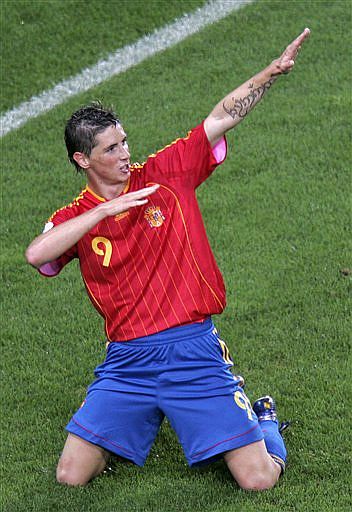
Speaking of Dutch players, time to move on to the second fatal flaw in the Benítez gameplan: the deployment of Ryan Babel on the left wing (a decision that can only be explained by the absence of another competent left-winger in the whole squad; a long-standing problem which Rafa’s summer spending splurge did nothing to address.) Dutch national coach Marco Van Basten described Babel as “having the potential to become the next Thierry Henry”. Having seen his performance against Birmingham on the left hand side of midfield (and, to a lesser degree, in the game against Derby), it’s high time that Benítez made the same realisation with Babel that Arsène Wenger made with Henry when signing the Frenchman from Juventus (i.e. that the player he has at his disposal is not, and never will be, a left winger.) By all means let Babel drift wide from a central position, but let him start in a central position in the first place.
In short then, Rafa, a few requests: when the transfer window re-opens, stop pretending the current squad is the finished article (like you did in the last two weeks of August) and do some business (after all, the club isn’t exactly hard-pressed for transfer funds, is it?) Buy a left-winger (I hear Florent Malouda is angling for a move from Chelsea now that the Special One(TM) has gone; failing that, why not Ricardo Quaresma?), a centre-back to replace Hyypiä (Vincent Kompany?) and some adequate back-up forwards (perhaps a cash-plus-Kuyt bid for Klaas-Jan Huntelaar? Karim Benzema?) Try Babel and Torres as a front pairing (even if it doesn’t work, it can’t be any worse than Kuyt/Voronin.) Cut your losses on Crouch, Kuyt and Voronin (I know the latter was a Bosman signing, but he’s hardly even worth the wages we’re paying him, which aren’t inconsiderable, I might add.)
Above all, abandon the rotation system (at least until you have the players to make it work); given that the teams expected to challenge for the title all have their own problems to deal with (given that Chelsea, in the wake of Mourinho’s departure, are in a state of flux; that Arsenal suffer from a lack of height, not to mention adequate cover, in the centre-back positions; that Manchester United, even with Rooney and Ronaldo back, still often lack penetration and still don’t have a recognised striker in their squad, with the possible of exception of Louis Saha, who's hardly used anyway), it’s not inconceivable that Liverpool (even with the squad we have now, which is still far from complete) can make a serious push for the league (after all, the three-point gap between ourselves and leaders Arsenal is hardly insurmountable.) However, if Benítez continues to indulge in this kind of needless tinkering, then we will continue to drop points in these kinds of games and find ourselves well off the pace by February/March (and what’s the point of saving your energy for the end of the season if the gap at the top is irretrievable?) That kind of meek capitulation (in a season which represents our best chance of winning the league in years) would be shameful and would probably (and, arguably, rightly) cost Benítez his job.
Monday, 20 August 2007
'Tis the season start! V: Serie A
Hello again, everyone!
And welcome to the final installment in this little European football mini-series; yes, having finally regained consciousness after my fit of rage yesterday evening (though I’ll admit that every team has been screwed over by/benefited from shambolic refereeing decisions; Fulham were arguably even more hard done by on Saturday), I’m back to preview the upcoming season in Serie A (which, like its Spanish counterpart, starts in six days time.)
After a mixed year of hard knocks (Calciopoli, missing out on hosting Euro 2012) and sparkling triumphs (victory at last year’s World Cup, and Milan’s Champions League triumph in Athens in May), Italian club football looks set to embark upon what the Italian press, at least, are describing as a Phoenix-like rise from the ashes, hailing the promotions of three of Italian club football’s most prestigious names (Juventus, Napoli and Genoa) as marking 2007/08 as a “Super” Serie A season. Juve’s return, in particular, is a remarkable one given their central role (particularly that of the disreputable Luciano Moggi, who inexplicably failed to receive a lifetime ban from calcio) in the Calciopoli scandal and their resultant (deserved) demotion to Serie B accompanied by a points penalty (ultimately reduced on appeal to nine points.) In truth, despite losing Fabio Cannavaro, Emerson, Patrick Vieira and Žlatan Ibrahimovic in the summer of 2006, the squad that remained was far too strong for Serie B (containing as it did the likes of Pavel Nedvěd, Mauro Camoranesi, Alex Del Piero and David Trézéguet) and Juve have made a strong statement of their ambition in the transfer market activity this summer as well. Having worked wonders to keep Parma in Serie A last year, Claudio “Tinkerman” Ranieri has been rewarded with the manager’s job at Juve for the coming season (which became available after Didier Deschamps left the club as a result of disputes with the club’s board, notably general manager Alessio Secco), as well as a substantial treasure chest to bolster the squad; the signings Ranieri has made look similarly impressive (particularly the likes of Jorge Andrade and Ždenek Grygera at the back, Tiago in the centre of midfield and Vincenzo Iaquinta up front, a player who has had a reasonable goal record at Udinese over the past couple of seasons despite playing in a side that isn’t famed for its creativity) and, perhaps more crucially, the club’s established star players have all signed new contracts to keep them at the club. It would be unrealistic to expect Juve to challenge for the title this year, but the squad does look strong and I wouldn’t be at all surprised to see them qualify for the 2008/09 edition of the Champions League.
In terms of the title, it’s hard to see beyond the two Milanese sides, particularly Inter, who were by some considerable distance the best side in Serie A last year, and who have reinforced an already strong squad with one of Serie A’s best forwards of recent times, David Suazo from Cagliari (a sensible buy considering Adriano’s continuing malaise.) Importantly, they have also bought the excellent Cristian Chivu from Roma, which not only improves their own back line but, more importantly, weakens that of a potential rival. If the new signings click, and if the likes of Štanković and Ibrahimović are as impressive this season as they were last season, Inter should be too strong for everyone else this season. Milan should be their strongest challengers this year, particularly as this year they won’t have to deal with the psychological setback of an eight point penalty this season, and one would expect many of their underperforming stars from last year (in particular the otherwise brilliant Andrea Pirlo) to do better this year. However, concerns understandably remain; for one thing, Milan’s squad remains an ageing one, particularly at the back (the likes of Paolo Maldini, Cafú, Giuseppe Favalli and Serginho are closer to 40 than they are to 30, while even the likes of Alessandro Nesta, Massimo Oddo, Dario Šimić, Clarence Seedorf, Ronaldo and Pippo Inzaghi are all over 30) and Milan’s transfer market activity over the summer (so far only bringing in Brazilian wunderkind Alexandre Pato from Internacional) has done little to rectify that problem. Furthermore, much like Arsenal, Liverpool and Manchester United, Milan also lack a recognised centre-forward who will score twenty goals a season (something Alberto Gilardino has failed to do in both of his seasons at the San Siro, and which he looks unlikely to do any time soon) which Pato’s arrival will do nothing to change (given that Pato, much like his compatriot and team-mate, Kaká, is more goal creator than goalscorer.) Add to that all the time Milan’s hierarchy have wasted in pursuing Ronaldinho, and one gets the impression that Milan will again fall short. Another outside bet for the Scudetto may be last year’s runners-up Roma (1-0 victors over Inter in the Italian Supercup last night), who, despite the loss of Chivu, have made some astute purchases again this summer (not only buying a more than capable replacement for Chivu in the form of Juan from Bayer Leverkusen, but also at half the price they sold Chivu for; meanwhile, they have also brought in a couple of talented wingers, with Mauro Esposito arriving from Cagliari and the ageing but still effective Ludovic Giuly arriving on a free transfer from Barcelona.) Roma’s main problem, though, will be the same one that has beset them for the last few seasons, namely that their squad is rather thin and still doesn’t cope well when it comes to juggling domestic and European commitments. The continuing speculation over Mancini’s future is unlikely to help their cause, either.
Many observers would expect Inter, Milan, Juve and Roma to qualify quite comfortably for the Champions League (particularly as last year’s Champions League qualifiers, Lazio, haven’t strengthened as much as they would have liked) but what of the UEFA Cup places? One would expect Lazio to gain one of those UEFA Cup slots, even if they haven’t strengthened well enough to qualify for the Champions League again (only Juan Carrizo, arriving from River Plate as a replacement for the retiring Angelo Peruzzi, and Mourad Meghni, the 178th(*) “New Zidane” joining from Bologna, have arrived so far); under Delio Rossi, a compact, organized and spirited team has been forged which should be good enough to qualify for Europe. However, much like their cross-town rivals, Lazio may be undone by their lack of squad depth, while there is also too much of a dependence on Tommaso Rocchi and Goran Pandev for goals (the blunt truth is that the likes of Simone Inzaghi, Igli Tare and Stephen Makinwa just don’t score often enough.) Similarly, Fiorentina should have more than enough quality to qualify for the UEFA Cup this year (particularly given that they won’t have to contend with the somewhat harsh 15 point penalty they had to deal with last year) but are unlikely to do any more than that; the Viola have a number of talented youngsters (a number that was swelled this summer by the arrivals of Arturo Lupoli from Arsenal and Anthony Vanden Borre from Anderlecht) but the loss of Luca Toni to Bayern München is bound to hurt them (a lot of pressure will be put on Adrian Mutu and youngster Giampaolo Pazzini to lead the front line in the same way as Toni, something that I don’t think either player is quite capable of doing.) The arrival of Christian Vieri (a notoriously moody player, and one who is unlikely to encourage unity and team spirit within the squad) also looks like a bit of a gamble. The continuing development of Riccardo Montolivo should be fascinating to watch, though. Elsewhere, the comings and goings at Palermo (OK, they have bought well, bringing in Fabrizio Miccolì from Juve, Giulio Migliaccio from Atalanta and Boško Janković, but how will they cope without long-time playmaker Eugenio Corini, not to mention national team forward David Di Michele?) make their prospects almost impossible to call, as do the infamous trigger-happy tendencies of their chairman, Maurizio Zamparini. It will also be interesting to see how the likes of Sampdoria and Torino do this year; Samp may have lost Fabio Quagliarella (one of last year’s revelations in Serie A), but have brought a number of interesting forwards to the club, notably Vincenzo Montella, on a Bosman from Roma, and Real Madrid bad boy Antonio “Fat Tony” Cassano on loan. If Cassano stays out of trouble, he could be the fantasista Samp (a side that has traditionally been solid but unspectacular) have needed to elevate themselves to the level of genuine European contenders; however, his hair-trigger temperament means that it could all end in disaster. Torino could also be set to greatly improve on a disappointing season last year, in which they only just avoided the drop; the arrivals of both Corini and Di Michele from Palermo could provide the goals that Toro were sorely lacking last year (my hunch is that European football may just be beyond them, though.)
In terms of the relegation positions, Genoa are probably the most likely of the promoted sides to struggle, given that they were arguably the weakest of the three promoted teams, not to mention the fact that they have struggled to strengthen the squad significantly this summer (most of their new arrivals have been youngsters from other sides, including the loan arrival of Marco Borriello from Milan, and the arrival of Matteo Paro from Juventus.) However, Napoli (a team I’ve had a soft spot for ever since this man was fronting Channel 4’s Italian football coverage) should have enough to stay up; it’s difficult to predict how many of their new arrivals will fare in Serie A (the likes of Marek Hamšík, Walter Gargano and Ezequiel Lavezzi, while all talented youngsters, don’t have any experience of Serie A) and goals may be something of a problem, but the side (especially a defence that is marshalled by Fabio Cannavaro’s younger and only slightly less talented brother, Paolo) looks to be solid enough to survive. Reggina, as ever, look set to struggle near the wrong end of the table (particularly given the departure of Rolando Bianchi) but will probably stay up (after all, they have been in this position before and know what it takes to survive; they also had an excellent season last season, and would have finished much higher had it not been for their 11 point penalty.) Livorno (minus talismanic striker Cristiano Lucarelli) could also struggle, while Atalanta and Empoli overachieved last year with relatively modest squads and are unlikely to fare as well this year. However, my tips to join Genoa in Serie B in 2008/09 would be Siena and Cagliari; Siena were rather fortunate to escape the drop on the final day by beating a Lazio side that had nothing to play for, and last year had the motivation of trying to achieve Serie A survival to honour the memory of much-loved and now deceased former chairman Paolo De Luca (the squad still looks weak, particularly with the loss of Cristian Molinaro to Juve, and Andrea Mandorlini will have his work cut out trying to keep them up.) Cagliari, meanwhile, have lost their three most important attacking players: David Suazo (to Inter), Mauro Esposito (to Roma) and Antonio Langella (to Atalanta.) The loss of Suazo looks particularly damaging (given that his goals were possibly the only thing keeping Cagliari afloat over the past couple of seasons), while the new signings don’t convince (a season of suffering therefore beckons for Cagliari’s tifosi.)
OK, that’s the end of the Serie A preview, and indeed the series [column wipes tear from eye and sighs wistfully.] All that remains is to offer up my final set of rubbish predictions for the coming season, so here goes:
• Champions – Internazionale (like Bayern in Germany, they’re just far better than anyone else.)
• Runners-up – Milan (the prospect of Pato, Kaká and Pirlo as a playmaking trio is mouthwatering, but the side still lacks a striker.)
• Champions League spots – Juventus (next year’s title challengers?), Roma (nice starting XI, shame about the squad.)
• UEFA Cup spots – Lazio (solid side with a smattering of talented players, notably Rocchi, Pandev and Ledesma, but last year’s 3rd place finish probably owed as much to who was missing and who was more heavily penalised as their own merits), Fiorentina (might have been Champions League contenders had Toni stayed), Sampdoria (though that still depends on Cassano’s behaviour, not to mention the Coppa Italia outcome.)
• Relegation (in descending order) – Genoa (though I hope I’m wrong), Cagliari (not enough firepower), Siena (not enough quality full stop.)
Well, time to bid you all Adieu for now. Hope it’s been as much fun for you reading these previews as it has been for me writing them, and enjoy the football this season.
Liam
(*) – Not an official statistic.
And welcome to the final installment in this little European football mini-series; yes, having finally regained consciousness after my fit of rage yesterday evening (though I’ll admit that every team has been screwed over by/benefited from shambolic refereeing decisions; Fulham were arguably even more hard done by on Saturday), I’m back to preview the upcoming season in Serie A (which, like its Spanish counterpart, starts in six days time.)
After a mixed year of hard knocks (Calciopoli, missing out on hosting Euro 2012) and sparkling triumphs (victory at last year’s World Cup, and Milan’s Champions League triumph in Athens in May), Italian club football looks set to embark upon what the Italian press, at least, are describing as a Phoenix-like rise from the ashes, hailing the promotions of three of Italian club football’s most prestigious names (Juventus, Napoli and Genoa) as marking 2007/08 as a “Super” Serie A season. Juve’s return, in particular, is a remarkable one given their central role (particularly that of the disreputable Luciano Moggi, who inexplicably failed to receive a lifetime ban from calcio) in the Calciopoli scandal and their resultant (deserved) demotion to Serie B accompanied by a points penalty (ultimately reduced on appeal to nine points.) In truth, despite losing Fabio Cannavaro, Emerson, Patrick Vieira and Žlatan Ibrahimovic in the summer of 2006, the squad that remained was far too strong for Serie B (containing as it did the likes of Pavel Nedvěd, Mauro Camoranesi, Alex Del Piero and David Trézéguet) and Juve have made a strong statement of their ambition in the transfer market activity this summer as well. Having worked wonders to keep Parma in Serie A last year, Claudio “Tinkerman” Ranieri has been rewarded with the manager’s job at Juve for the coming season (which became available after Didier Deschamps left the club as a result of disputes with the club’s board, notably general manager Alessio Secco), as well as a substantial treasure chest to bolster the squad; the signings Ranieri has made look similarly impressive (particularly the likes of Jorge Andrade and Ždenek Grygera at the back, Tiago in the centre of midfield and Vincenzo Iaquinta up front, a player who has had a reasonable goal record at Udinese over the past couple of seasons despite playing in a side that isn’t famed for its creativity) and, perhaps more crucially, the club’s established star players have all signed new contracts to keep them at the club. It would be unrealistic to expect Juve to challenge for the title this year, but the squad does look strong and I wouldn’t be at all surprised to see them qualify for the 2008/09 edition of the Champions League.
In terms of the title, it’s hard to see beyond the two Milanese sides, particularly Inter, who were by some considerable distance the best side in Serie A last year, and who have reinforced an already strong squad with one of Serie A’s best forwards of recent times, David Suazo from Cagliari (a sensible buy considering Adriano’s continuing malaise.) Importantly, they have also bought the excellent Cristian Chivu from Roma, which not only improves their own back line but, more importantly, weakens that of a potential rival. If the new signings click, and if the likes of Štanković and Ibrahimović are as impressive this season as they were last season, Inter should be too strong for everyone else this season. Milan should be their strongest challengers this year, particularly as this year they won’t have to deal with the psychological setback of an eight point penalty this season, and one would expect many of their underperforming stars from last year (in particular the otherwise brilliant Andrea Pirlo) to do better this year. However, concerns understandably remain; for one thing, Milan’s squad remains an ageing one, particularly at the back (the likes of Paolo Maldini, Cafú, Giuseppe Favalli and Serginho are closer to 40 than they are to 30, while even the likes of Alessandro Nesta, Massimo Oddo, Dario Šimić, Clarence Seedorf, Ronaldo and Pippo Inzaghi are all over 30) and Milan’s transfer market activity over the summer (so far only bringing in Brazilian wunderkind Alexandre Pato from Internacional) has done little to rectify that problem. Furthermore, much like Arsenal, Liverpool and Manchester United, Milan also lack a recognised centre-forward who will score twenty goals a season (something Alberto Gilardino has failed to do in both of his seasons at the San Siro, and which he looks unlikely to do any time soon) which Pato’s arrival will do nothing to change (given that Pato, much like his compatriot and team-mate, Kaká, is more goal creator than goalscorer.) Add to that all the time Milan’s hierarchy have wasted in pursuing Ronaldinho, and one gets the impression that Milan will again fall short. Another outside bet for the Scudetto may be last year’s runners-up Roma (1-0 victors over Inter in the Italian Supercup last night), who, despite the loss of Chivu, have made some astute purchases again this summer (not only buying a more than capable replacement for Chivu in the form of Juan from Bayer Leverkusen, but also at half the price they sold Chivu for; meanwhile, they have also brought in a couple of talented wingers, with Mauro Esposito arriving from Cagliari and the ageing but still effective Ludovic Giuly arriving on a free transfer from Barcelona.) Roma’s main problem, though, will be the same one that has beset them for the last few seasons, namely that their squad is rather thin and still doesn’t cope well when it comes to juggling domestic and European commitments. The continuing speculation over Mancini’s future is unlikely to help their cause, either.
Many observers would expect Inter, Milan, Juve and Roma to qualify quite comfortably for the Champions League (particularly as last year’s Champions League qualifiers, Lazio, haven’t strengthened as much as they would have liked) but what of the UEFA Cup places? One would expect Lazio to gain one of those UEFA Cup slots, even if they haven’t strengthened well enough to qualify for the Champions League again (only Juan Carrizo, arriving from River Plate as a replacement for the retiring Angelo Peruzzi, and Mourad Meghni, the 178th(*) “New Zidane” joining from Bologna, have arrived so far); under Delio Rossi, a compact, organized and spirited team has been forged which should be good enough to qualify for Europe. However, much like their cross-town rivals, Lazio may be undone by their lack of squad depth, while there is also too much of a dependence on Tommaso Rocchi and Goran Pandev for goals (the blunt truth is that the likes of Simone Inzaghi, Igli Tare and Stephen Makinwa just don’t score often enough.) Similarly, Fiorentina should have more than enough quality to qualify for the UEFA Cup this year (particularly given that they won’t have to contend with the somewhat harsh 15 point penalty they had to deal with last year) but are unlikely to do any more than that; the Viola have a number of talented youngsters (a number that was swelled this summer by the arrivals of Arturo Lupoli from Arsenal and Anthony Vanden Borre from Anderlecht) but the loss of Luca Toni to Bayern München is bound to hurt them (a lot of pressure will be put on Adrian Mutu and youngster Giampaolo Pazzini to lead the front line in the same way as Toni, something that I don’t think either player is quite capable of doing.) The arrival of Christian Vieri (a notoriously moody player, and one who is unlikely to encourage unity and team spirit within the squad) also looks like a bit of a gamble. The continuing development of Riccardo Montolivo should be fascinating to watch, though. Elsewhere, the comings and goings at Palermo (OK, they have bought well, bringing in Fabrizio Miccolì from Juve, Giulio Migliaccio from Atalanta and Boško Janković, but how will they cope without long-time playmaker Eugenio Corini, not to mention national team forward David Di Michele?) make their prospects almost impossible to call, as do the infamous trigger-happy tendencies of their chairman, Maurizio Zamparini. It will also be interesting to see how the likes of Sampdoria and Torino do this year; Samp may have lost Fabio Quagliarella (one of last year’s revelations in Serie A), but have brought a number of interesting forwards to the club, notably Vincenzo Montella, on a Bosman from Roma, and Real Madrid bad boy Antonio “Fat Tony” Cassano on loan. If Cassano stays out of trouble, he could be the fantasista Samp (a side that has traditionally been solid but unspectacular) have needed to elevate themselves to the level of genuine European contenders; however, his hair-trigger temperament means that it could all end in disaster. Torino could also be set to greatly improve on a disappointing season last year, in which they only just avoided the drop; the arrivals of both Corini and Di Michele from Palermo could provide the goals that Toro were sorely lacking last year (my hunch is that European football may just be beyond them, though.)
In terms of the relegation positions, Genoa are probably the most likely of the promoted sides to struggle, given that they were arguably the weakest of the three promoted teams, not to mention the fact that they have struggled to strengthen the squad significantly this summer (most of their new arrivals have been youngsters from other sides, including the loan arrival of Marco Borriello from Milan, and the arrival of Matteo Paro from Juventus.) However, Napoli (a team I’ve had a soft spot for ever since this man was fronting Channel 4’s Italian football coverage) should have enough to stay up; it’s difficult to predict how many of their new arrivals will fare in Serie A (the likes of Marek Hamšík, Walter Gargano and Ezequiel Lavezzi, while all talented youngsters, don’t have any experience of Serie A) and goals may be something of a problem, but the side (especially a defence that is marshalled by Fabio Cannavaro’s younger and only slightly less talented brother, Paolo) looks to be solid enough to survive. Reggina, as ever, look set to struggle near the wrong end of the table (particularly given the departure of Rolando Bianchi) but will probably stay up (after all, they have been in this position before and know what it takes to survive; they also had an excellent season last season, and would have finished much higher had it not been for their 11 point penalty.) Livorno (minus talismanic striker Cristiano Lucarelli) could also struggle, while Atalanta and Empoli overachieved last year with relatively modest squads and are unlikely to fare as well this year. However, my tips to join Genoa in Serie B in 2008/09 would be Siena and Cagliari; Siena were rather fortunate to escape the drop on the final day by beating a Lazio side that had nothing to play for, and last year had the motivation of trying to achieve Serie A survival to honour the memory of much-loved and now deceased former chairman Paolo De Luca (the squad still looks weak, particularly with the loss of Cristian Molinaro to Juve, and Andrea Mandorlini will have his work cut out trying to keep them up.) Cagliari, meanwhile, have lost their three most important attacking players: David Suazo (to Inter), Mauro Esposito (to Roma) and Antonio Langella (to Atalanta.) The loss of Suazo looks particularly damaging (given that his goals were possibly the only thing keeping Cagliari afloat over the past couple of seasons), while the new signings don’t convince (a season of suffering therefore beckons for Cagliari’s tifosi.)

OK, that’s the end of the Serie A preview, and indeed the series [column wipes tear from eye and sighs wistfully.] All that remains is to offer up my final set of rubbish predictions for the coming season, so here goes:
• Champions – Internazionale (like Bayern in Germany, they’re just far better than anyone else.)
• Runners-up – Milan (the prospect of Pato, Kaká and Pirlo as a playmaking trio is mouthwatering, but the side still lacks a striker.)
• Champions League spots – Juventus (next year’s title challengers?), Roma (nice starting XI, shame about the squad.)
• UEFA Cup spots – Lazio (solid side with a smattering of talented players, notably Rocchi, Pandev and Ledesma, but last year’s 3rd place finish probably owed as much to who was missing and who was more heavily penalised as their own merits), Fiorentina (might have been Champions League contenders had Toni stayed), Sampdoria (though that still depends on Cassano’s behaviour, not to mention the Coppa Italia outcome.)
• Relegation (in descending order) – Genoa (though I hope I’m wrong), Cagliari (not enough firepower), Siena (not enough quality full stop.)
Well, time to bid you all Adieu for now. Hope it’s been as much fun for you reading these previews as it has been for me writing them, and enjoy the football this season.
Liam
(*) – Not an official statistic.
Tuesday, 14 August 2007
'Tis the season start! IV: La Liga
Hello everyone!
And welcome back after an entertaining weekend’s football (even Ligue Un had goals!); last weekend was also very satisfying from a personal perspective, with Gerrard bailing us out yet again and United showing a heartening inability to break down a half-decent defence.
Of course, one of the less illuminating fixtures from the weekend just gone was Sevilla’s 1-0 victory over Real Madrid in the first leg of the Spanish Supercopa, but that does lead us on neatly to the subject of Part 4 of this series: the upcoming season in La Liga (which is still 2 weeks away, mind, but with no competitive football in the intervening weeks, now is as good a time as any to preview the season.) As with any Spanish championship, the build-up to this year’s competition has been dominated by Real and Barcelona, with both clubs being active over the summer. The close season at Real Madrid has been particularly turbulent; despite miraculously leading Real to the La Liga title last year (despite having played truly shambolic football for most of the campaign), head honcho Ramon Calderón deemed Fabio Capello’s brand of defensive football to not be in keeping with the Merengues’ “artistic heritage” (as he put it), and Don Fabio was rewarded with the sack. In his stead came Getafe boss Bernd Schuster (apparently Calderón’s first choice as boss for last season, though hardly one famed for his attacking instincts, either at Levante or Getafe) and a raft of new signings; fellow countryman Christoph Metzelder was the first to arrive (on a free transfer from Borussia Dortmund), and he has since been followed by Pepe (€30m, from Porto), Soldado (returning from a loan spell at Osasuna), Saviola (arriving on a free from arch-rivals Barcelona) and Jerzy Dudek (arriving on a free from Liverpool.) In the past week Real have been going Dutch, with Drenthe (€13m, from Feyenoord) and Sneijder (€25m, from Ajax) arriving to add some much-needed width to the side (Sneijder can play on either wing, while Drenthe may well ultimately be re-deployed as a left-back to replace Roberto Carlos, having previously undergone a successful conversion to the left-wing position at Feyenoord), while there is still every chance of Arjen Robben arriving from Chelsea before the transfer window shuts. However, doubts persist about a squad that continues to look unbalanced; Real have a glut of players down the centre of the pitch (Cannavaro, Pepe, Metzelder and Sergio Ramos at centre-back, though the latter is admittedly a converted right-back, while Metzelder has on occasion played on the right as well; Diarra, Emerson and Gago in central midfield; and a huge number of centre-forwards, with Raúl, Van Nistelrooy, Saviola, Baptista, Higuaín, Soldado, Cassano, Guti and Robinho all competing for just two forward positions, though Cassano looks almost certain to join Sampdoria on loan, while Real are entertaining offers for Baptista) but an alarming lack of wide players, even with the recent Dutch arrivals (the right midfield berth may recently have been filled by Sneijder, but there is no recognisable replacement in the squad should he get injured, while Cicinho’s likely departure to Roma leaves the ageing Salgado and the inexperienced Miguel Torres as the squad’s only right-backs; meanwhile, the failure to secure the signature of Robben so far may mean playing Drenthe on the left-side of midfield, with Marcelo playing at left-back, with there being no cover for either position.) The lack of a ball-playing central midfielder who can dictate the rhythm of Real’s play has led to Schuster’s pursuit of the likes of Kaká, Cesc and Ballack (all of which look likely to be unsuccessful), while questions can legitimately be asked about the actual signings Real have made: Drenthe has potential but only a year’s worth of experience in the Eredivisie, Saviola continuously flattered to deceive (certainly in goalscoring terms) at Barça (who were ultimately quite happy to let him go), Dudek will only warm the bench at the Bernabéu, and of Real’s defensive signings, only Pepe has impressed in pre-season (though it would be foolish to write off an international player like Metzelder just yet.) Having said all that, if Van Nistelrooy continues to score frequently, if Sneijder can prove he is ready for the big leagues (having been content to be a big fish in the small Eredivisie pond up to now), if Robben arrives to provide the width on the left that they currently have on the right, and if Iker Casillas can continue to perform miracles in the Real goal, they will always have a chance of winning the league again this year.
A better bet, however, may be their eternal rivals and last year’s runners-up, Barcelona. The failure to secure a third straight league crown (not to mention being pipped by their bitter rivals) clearly stung Barça, who have bought big, not least in the form of Thierry Henry (whose tedious transfer saga has finally been resolved, with his arrival from Arsenal for €24m.) His arrival adds to an already glittering array of attacking talent (not only Eto’o, Ronaldinho and Messi, but also the burgeoning talents of Mexican youngster Giovani Dos Santos and Serbian-Spanish youngster Bojan Krkić); however, any suggestions that Barcelona may have been about to embark on their own ill-fated galáctico project have surely been quashed by their other summer signings, including a holding midfielder (Yaya Touré, a €8.8m bargain from Monaco), a left back (Éric Abidal, €14.8m from Lyon) and a centre-back (Gabriel Milito, €19.9m from Zaragoza.) These re-inforcements, plus a burning desire to make up for their failure to win any major trophies last year, should make Barça favourites not only for the league, but also for the Champions league, too.
However, concerns that this year’s Spanish title race may degenerate into a Barça v Real duel thankfully look like being unfounded, with both Sevilla and Valencia looking like being title challengers again. Valencia (who would surely have mounted a more significant title challenge had it not been for an injury list of Chelsea-esque proportions) have not only managed to keep hold of the superb David Villa, but have also strengthened their already impressive squad well (not least up front, where beanpole Serbian striker Nikola Žigić has arrived from Racing Santander to partner Villa, with Arizmendi, a new arrival from Deportivo, providing back-up.) If Villa stays for the whole season (as now seems likely), and if their squad stays fit (particularly left-winger Vicente, who has had a terrible time with injuries over the last 2-3 years), they should be major contenders. Sevilla have also managed to keep hold of all of their star players from last year (although the future of terrific all-action right-back Dani Alves remains in doubt), not to mention (perhaps more importantly) their coach, Juande Ramos (one of La Liga’s brightest young managers.) Sevilla have also bought well (particularly in getting hold of the likes of Seydou Keita from Lens and Tom de Mul, who was one of the stars of Belgium’s run to the semi-finals of the Under-21 European Championship), while the likes of Jesús Navas and Fredi Kanouté remain, so a title tilt remains a possibility (at least if Alves is still at the club when the transfer window closes.)
In terms of the UEFA Cup positions, it remains to be seen how Villarreal and Zaragoza cope without Forlán and Gabi Milito respectively, meaning that perennial losers Atlético de Madrid surely ought to be able to claim one of the UEFA Cup spots, even without Torres (particularly as his replacement is Forlán himself, not only providing Atléti with one of La Liga’s top marksmen, but also weakening one of their main competitors in the race for Europe); Raúl García also looks like a sound buy. Atléti being Atléti, though, their biggest nemesis will be themselves. Zaragoza also look good for a UEFA Cup spot, despite losing Gabi Milito, particularly as their other Milito, Diego, remains and will be aided up front by Ricardo Oliveira (who, despite a disastrous stint with Milan last year, may yet rehabilitate himself in La Liga.) The loss of Gabi Milito will also be softened by the arrivals of Roberto Ayala and Paco Pavón (from Valencia via Villarreal, and Real Madrid respectively.) Villarreal may struggle, though, given that Forlán’s replacement is Jon Dahl Tomasson from Stuttgart (who is more goal creator than goalscorer.) Espanyol (reinforced by Valdo’s arrival from Osasuna) and Osasuna (aided up front by the arrivals of Walter Pandiani and Javier Portillo, but who may ultimately be hurt by the losses of Raúl García, Valdo and Soldado) may also be good outside bets for Europe.
Finally, onto the relegation battle; of the newly-promoted sides, Murcia look the most likely to consolidate their position in the top division, given that they have bought better than either Almería or Valladolid (the purchases of Real Madrid’s Uruguayan hard man, Pablo García, and Valencia left-winger Mario Regueiro, also an Uruguayan, look particularly astute.) By contrast, Almería and Valladolid don’t look to have strengthened sufficiently to avoid the drop. Elsewhere, Athletic Bilbao (who, contrary to popular belief, tend to struggle these days largely because of their meagre spending power, not their Basque-only selection policy), Recreativo de Huelva (plus former Liverpool “bright young things” Anthony Le Tallec and Florent Sinama-Pongolle, but minus coach Marcelino and key players Santi Cazorla & Ikechukwu Uche) and Deportivo La Coruña (who have lost some key players which haven’t been adequately replaced, notably Joan Capdevila to Villarreal and Jorge Andrade to Juventus) could all struggle against the drop this year. However, my tip to be joining Almería and Valladolid in La Segunda División for 2008/09 would be Levante, who were lucky to avoid relegation last year and who will be without Salva Ballesta and Olivier Kapo for the coming season (while new arrivals like Savio and Shota Arveladze are both over 30 and could struggle to keep Levante up.)
Well, that’s all for another week, folks. I’ll be back at the same time next week for the final installment in the series (i.e. my Serie A preview); in the meantime, to keep you amused for the next seven days, here are my rubbish predictions for the coming La Liga season:
• Champions – Barcelona (Touré should give the midfield steel, the defence looks stronger, while the attack should again be breathtaking, provided all the egos are kept in check; Dos Santos and Krkić could be explosive, too.)
• Runners-up (and automatic Champions League place) – Valencia (possibly going with my heart over my head here, but the squad looks stronger and more balanced than Real Madrid’s, while Žigić could potentially be a brilliant partner for David Villa; their title challenge may ultimately be undone by their traditionally conservative tactics, though.)
• Champions League spots – Real Madrid (injuries in certain areas could be disastrous for them, while they can sometimes be a bit too reliant on Casillas bailing out the defence, not to mention their reliance on Van Nistelrooy’s goals), Sevilla (have the squad to challenge, but need to shake off that nasty draw habit from last season.)
• UEFA Cup spots – Atlético de Madrid (the weakness of the rest of the field surely means that even Atlético can’t blow this opportunity), Zaragoza (can still count on Diego Milito’s goals), Espanyol (though their place may depend on the outcome of the Copa del Rey.)
• Relegation – Levante, Valladolid, Almería (in that order.)
And welcome back after an entertaining weekend’s football (even Ligue Un had goals!); last weekend was also very satisfying from a personal perspective, with Gerrard bailing us out yet again and United showing a heartening inability to break down a half-decent defence.
Of course, one of the less illuminating fixtures from the weekend just gone was Sevilla’s 1-0 victory over Real Madrid in the first leg of the Spanish Supercopa, but that does lead us on neatly to the subject of Part 4 of this series: the upcoming season in La Liga (which is still 2 weeks away, mind, but with no competitive football in the intervening weeks, now is as good a time as any to preview the season.) As with any Spanish championship, the build-up to this year’s competition has been dominated by Real and Barcelona, with both clubs being active over the summer. The close season at Real Madrid has been particularly turbulent; despite miraculously leading Real to the La Liga title last year (despite having played truly shambolic football for most of the campaign), head honcho Ramon Calderón deemed Fabio Capello’s brand of defensive football to not be in keeping with the Merengues’ “artistic heritage” (as he put it), and Don Fabio was rewarded with the sack. In his stead came Getafe boss Bernd Schuster (apparently Calderón’s first choice as boss for last season, though hardly one famed for his attacking instincts, either at Levante or Getafe) and a raft of new signings; fellow countryman Christoph Metzelder was the first to arrive (on a free transfer from Borussia Dortmund), and he has since been followed by Pepe (€30m, from Porto), Soldado (returning from a loan spell at Osasuna), Saviola (arriving on a free from arch-rivals Barcelona) and Jerzy Dudek (arriving on a free from Liverpool.) In the past week Real have been going Dutch, with Drenthe (€13m, from Feyenoord) and Sneijder (€25m, from Ajax) arriving to add some much-needed width to the side (Sneijder can play on either wing, while Drenthe may well ultimately be re-deployed as a left-back to replace Roberto Carlos, having previously undergone a successful conversion to the left-wing position at Feyenoord), while there is still every chance of Arjen Robben arriving from Chelsea before the transfer window shuts. However, doubts persist about a squad that continues to look unbalanced; Real have a glut of players down the centre of the pitch (Cannavaro, Pepe, Metzelder and Sergio Ramos at centre-back, though the latter is admittedly a converted right-back, while Metzelder has on occasion played on the right as well; Diarra, Emerson and Gago in central midfield; and a huge number of centre-forwards, with Raúl, Van Nistelrooy, Saviola, Baptista, Higuaín, Soldado, Cassano, Guti and Robinho all competing for just two forward positions, though Cassano looks almost certain to join Sampdoria on loan, while Real are entertaining offers for Baptista) but an alarming lack of wide players, even with the recent Dutch arrivals (the right midfield berth may recently have been filled by Sneijder, but there is no recognisable replacement in the squad should he get injured, while Cicinho’s likely departure to Roma leaves the ageing Salgado and the inexperienced Miguel Torres as the squad’s only right-backs; meanwhile, the failure to secure the signature of Robben so far may mean playing Drenthe on the left-side of midfield, with Marcelo playing at left-back, with there being no cover for either position.) The lack of a ball-playing central midfielder who can dictate the rhythm of Real’s play has led to Schuster’s pursuit of the likes of Kaká, Cesc and Ballack (all of which look likely to be unsuccessful), while questions can legitimately be asked about the actual signings Real have made: Drenthe has potential but only a year’s worth of experience in the Eredivisie, Saviola continuously flattered to deceive (certainly in goalscoring terms) at Barça (who were ultimately quite happy to let him go), Dudek will only warm the bench at the Bernabéu, and of Real’s defensive signings, only Pepe has impressed in pre-season (though it would be foolish to write off an international player like Metzelder just yet.) Having said all that, if Van Nistelrooy continues to score frequently, if Sneijder can prove he is ready for the big leagues (having been content to be a big fish in the small Eredivisie pond up to now), if Robben arrives to provide the width on the left that they currently have on the right, and if Iker Casillas can continue to perform miracles in the Real goal, they will always have a chance of winning the league again this year.
A better bet, however, may be their eternal rivals and last year’s runners-up, Barcelona. The failure to secure a third straight league crown (not to mention being pipped by their bitter rivals) clearly stung Barça, who have bought big, not least in the form of Thierry Henry (whose tedious transfer saga has finally been resolved, with his arrival from Arsenal for €24m.) His arrival adds to an already glittering array of attacking talent (not only Eto’o, Ronaldinho and Messi, but also the burgeoning talents of Mexican youngster Giovani Dos Santos and Serbian-Spanish youngster Bojan Krkić); however, any suggestions that Barcelona may have been about to embark on their own ill-fated galáctico project have surely been quashed by their other summer signings, including a holding midfielder (Yaya Touré, a €8.8m bargain from Monaco), a left back (Éric Abidal, €14.8m from Lyon) and a centre-back (Gabriel Milito, €19.9m from Zaragoza.) These re-inforcements, plus a burning desire to make up for their failure to win any major trophies last year, should make Barça favourites not only for the league, but also for the Champions league, too.
However, concerns that this year’s Spanish title race may degenerate into a Barça v Real duel thankfully look like being unfounded, with both Sevilla and Valencia looking like being title challengers again. Valencia (who would surely have mounted a more significant title challenge had it not been for an injury list of Chelsea-esque proportions) have not only managed to keep hold of the superb David Villa, but have also strengthened their already impressive squad well (not least up front, where beanpole Serbian striker Nikola Žigić has arrived from Racing Santander to partner Villa, with Arizmendi, a new arrival from Deportivo, providing back-up.) If Villa stays for the whole season (as now seems likely), and if their squad stays fit (particularly left-winger Vicente, who has had a terrible time with injuries over the last 2-3 years), they should be major contenders. Sevilla have also managed to keep hold of all of their star players from last year (although the future of terrific all-action right-back Dani Alves remains in doubt), not to mention (perhaps more importantly) their coach, Juande Ramos (one of La Liga’s brightest young managers.) Sevilla have also bought well (particularly in getting hold of the likes of Seydou Keita from Lens and Tom de Mul, who was one of the stars of Belgium’s run to the semi-finals of the Under-21 European Championship), while the likes of Jesús Navas and Fredi Kanouté remain, so a title tilt remains a possibility (at least if Alves is still at the club when the transfer window closes.)
In terms of the UEFA Cup positions, it remains to be seen how Villarreal and Zaragoza cope without Forlán and Gabi Milito respectively, meaning that perennial losers Atlético de Madrid surely ought to be able to claim one of the UEFA Cup spots, even without Torres (particularly as his replacement is Forlán himself, not only providing Atléti with one of La Liga’s top marksmen, but also weakening one of their main competitors in the race for Europe); Raúl García also looks like a sound buy. Atléti being Atléti, though, their biggest nemesis will be themselves. Zaragoza also look good for a UEFA Cup spot, despite losing Gabi Milito, particularly as their other Milito, Diego, remains and will be aided up front by Ricardo Oliveira (who, despite a disastrous stint with Milan last year, may yet rehabilitate himself in La Liga.) The loss of Gabi Milito will also be softened by the arrivals of Roberto Ayala and Paco Pavón (from Valencia via Villarreal, and Real Madrid respectively.) Villarreal may struggle, though, given that Forlán’s replacement is Jon Dahl Tomasson from Stuttgart (who is more goal creator than goalscorer.) Espanyol (reinforced by Valdo’s arrival from Osasuna) and Osasuna (aided up front by the arrivals of Walter Pandiani and Javier Portillo, but who may ultimately be hurt by the losses of Raúl García, Valdo and Soldado) may also be good outside bets for Europe.
Finally, onto the relegation battle; of the newly-promoted sides, Murcia look the most likely to consolidate their position in the top division, given that they have bought better than either Almería or Valladolid (the purchases of Real Madrid’s Uruguayan hard man, Pablo García, and Valencia left-winger Mario Regueiro, also an Uruguayan, look particularly astute.) By contrast, Almería and Valladolid don’t look to have strengthened sufficiently to avoid the drop. Elsewhere, Athletic Bilbao (who, contrary to popular belief, tend to struggle these days largely because of their meagre spending power, not their Basque-only selection policy), Recreativo de Huelva (plus former Liverpool “bright young things” Anthony Le Tallec and Florent Sinama-Pongolle, but minus coach Marcelino and key players Santi Cazorla & Ikechukwu Uche) and Deportivo La Coruña (who have lost some key players which haven’t been adequately replaced, notably Joan Capdevila to Villarreal and Jorge Andrade to Juventus) could all struggle against the drop this year. However, my tip to be joining Almería and Valladolid in La Segunda División for 2008/09 would be Levante, who were lucky to avoid relegation last year and who will be without Salva Ballesta and Olivier Kapo for the coming season (while new arrivals like Savio and Shota Arveladze are both over 30 and could struggle to keep Levante up.)
Well, that’s all for another week, folks. I’ll be back at the same time next week for the final installment in the series (i.e. my Serie A preview); in the meantime, to keep you amused for the next seven days, here are my rubbish predictions for the coming La Liga season:
• Champions – Barcelona (Touré should give the midfield steel, the defence looks stronger, while the attack should again be breathtaking, provided all the egos are kept in check; Dos Santos and Krkić could be explosive, too.)
• Runners-up (and automatic Champions League place) – Valencia (possibly going with my heart over my head here, but the squad looks stronger and more balanced than Real Madrid’s, while Žigić could potentially be a brilliant partner for David Villa; their title challenge may ultimately be undone by their traditionally conservative tactics, though.)
• Champions League spots – Real Madrid (injuries in certain areas could be disastrous for them, while they can sometimes be a bit too reliant on Casillas bailing out the defence, not to mention their reliance on Van Nistelrooy’s goals), Sevilla (have the squad to challenge, but need to shake off that nasty draw habit from last season.)
• UEFA Cup spots – Atlético de Madrid (the weakness of the rest of the field surely means that even Atlético can’t blow this opportunity), Zaragoza (can still count on Diego Milito’s goals), Espanyol (though their place may depend on the outcome of the Copa del Rey.)
• Relegation – Levante, Valladolid, Almería (in that order.)
Wednesday, 8 August 2007
'Tis the season start! III: Premiership
Hello everybody!
Part 3 of our whistle-stop tour of Western European football takes us to a land of warm beer and Sky Sports: to a league where Greed is Good(TM) and where foreign ownership, ranging from the robber baron clearing a land of its natural resources and leaving millions of his fellow countrymen poverty-stricken (step forward Abramovich), to the human rights violator torturing and murdering his enemies (step forward Shinawatra) and on to various assorted American tycoons looking to make a fast buck (step forward Glazer, Hicks & Gillett, Lerner and, quite possibly sometime into the future, Kroenke), is rife. Yes, welcome to England. (By the way, I hasten to point that I’m not trying to get at Thais, Russians or Americans in general, or to portray England as some kind of morally superior nation: the story of Ken Bates’ management of Leeds United, and indeed Peter Risdale’s before that, has demonstrated that England has plenty of crooks itself.)
Anyway, that’s the last of my faintly leftist political rantings (honest!), and I will turn instead to discussing the football for the coming season, starting with the champions Manchester United. Despite winning last year’s crown, Alex Ferguson will probably be the first to admit that that particular gong occurred as much due to the chaos surrounding Chelsea as his own side’s merits, and that his squad was far from complete. To that end, Ferguson has mercifully brought to an end the tedious, year-long Owen Hargreaves transfer saga and (having splurged £18m the previous summer on the poor man’s Andrea Pirlo) finally got the midfield destroyer he has craved since the departure of a certain Sunderland boss (though this particular destroyer also came at a grotesquely inflated price, £17m, and isn’t a patch on the man he really wanted, Rino Gattuso.) With Ryan Giggs and Paul Scholes both now over 30, Ferguson also did the sensible thing and signed up two young replacements (in the form of Nani and Anderson, respectively.) At the time of writing, the signing of Carlos Tevez hadn’t yet been confirmed, but looks likely to before the season starts, confirming United’s status as the strongest squad in the country. That’s not to say that United don’t have their problems, though. For all the hype about United’s attacking signings, they still lack an obvious centre-forward/striker, something that Tevez’s arrival is unlikely to remedy; United may be able to get away with this now (with Chelsea being chaotically run, and with Liverpool & Arsenal not the finished article) but you wonder how long they can get away with having too many Chiefs and not enough Indians. United were also incredibly fortunate with injuries last season, and there are certain players that United can’t afford to lose; though Nani and Anderson have undoubted potential, they have played a combined total of less than 80 games in the Portuguese league (which, though not a bad league, is hardly La Liga or Serie A) and are not sufficiently experienced to replace Giggs and Scholes adequately if one (or both) of those players gets injured. And there is certainly no replacement for the one player in the United side that they can’t afford to lose (no prizes for guessing that said player is Cristiano Ronaldo, who was comfortably the best player in the league last year.) Last season’s injuries at the back, meanwhile, showed that the United defence is too dependent on Vidić being fit and in form.
Chelsea (despite being run in a manner almost as shambolic as that of Real Madrid) remain the side best placed to challenge them, particularly as they have addressed a number of the positions that needed sorting out from last year (that is, getting another centre-back as cover for Terry and Ricardo Carvalho, in the form of Tal Ben-Haim; another powerful centre-forward to reduce their reliance on Didier Drogba, in the form of Claudio Pizarro; and a left –winger to replace the now surely-departing Arjen Robben, in the form of the excellent Florent Malouda, who, as a Liverpool fan, is very much the one that got away.) However, those changes are, to some extent, cosmetic and fail to disguise what is something of a lop-sided squad; Chelsea have a glut of destroyers in midfield (see the likes of Makélélé and Lassana Diarra) and powerful box-to-box midfielders (Lampard, Essien, Mikel and now Sidwell) and a couple of good goalkeepers (in the form of Petr Čech and Carlo Cudicini), but, given Shevchenko’s recent malaise, have only one forward that regularly scores goals (in the form of Drogba, and the arrival of Pizarro certainly isn’t going to change that greatly), currently only one fully-fit full-back on each side of the pitch (Cole on the left, Johnson on the right), and, given Mourinho’s perpetual distrust of flair, will probably have only 2 wingers in the whole squad (Malouda on the left, Wright-Phillips on the right.) These problems could well be compounded if Chelsea have another glut of injuries like those of last season, while the current cease-fire between Mourinho and the club’s hierarchy still seems fragile to me (Mourinho’s relationship with new director of football Avram Grant is rumoured to be as frosty as that with Frank Arnesen, and with various different people trying to have their say in club affairs, don’t be surprised if those rumours about Mourinho’s departure start circulating again.)
And so on to the other two members of the so-called “Big Four”, starting with my own team, Liverpool, who are probably the most likely side out of the rest of the chasing pack to challenge Chelsea and United’s hegemony, though are still unlikely to win the league. Benítez has taken advantage of the new money made available by the club’s new ownership to try and spruce up Liverpool’s lacklustre attack, though doubts still persist about the goalscoring capabilities of his most expensive purchase, Fernando Torres: were his goal stats the result of playing in a comically inept Atlético de Madrid side, or is he simply not the natural finisher that Liverpool require? And are there any grounds to believe that his form will substantially improve at Liverpool? At the very least, his pace and skill on the ball aren’t in question, which might bring a welcome change in approach when it comes to Liverpool’s build-up play (instead of lumping the ball in the general direction of Crouch, Kuyt and Voronin, the midfield might play the ball on the ground, as they’re arguably capable of doing, and look to play good through balls rather than aimless punts.) Liverpool’s other attacking signings are, thankfully, less questionable: Babel, though still raw, offers pace, directness and a fair number of goals, while Benayoun may flourish in a side that has the solidity needed for him to play his natural game (while his creativity should make Liverpool’s approach play less predictable.) Add to that a sound goalkeeper, a fairly watertight defence (with the Agger-Carragher partnership one of the best in the league) and one of the best central midfields in the league (with Gerrard, Xabi Alonso and Mascherano all experienced international midfielders) and you have a side, as Paul Doyle says, that could win the league, but will probably just fall short (though the gap will surely be less than last year); with Chelsea’s early season injury troubles, they may just creep into 2nd place, but 3rd is, again, probably more likely.
The hardest of the Big Four to predict is arguably Arsenal, given that their season could end with anything from triumph to disaster. As my learned Arsenal-supporting friend Tyler Duffy (aka BillEShears on the GU Football Weekly blog) points out, the loss of Henry has been rather overblown; however, much as in Liverpool’s case, it’s difficult to see them scoring enough goals, either from midfield (Cesc, Rosický and Hleb just don’t score enough, particularly as the latter two are regularly shoehorned into wing positions which don’t suit them) or up front (particularly if Van Persie is out for the early part of the season, which places a lot of pressure on Eduardo Da Silva, a man with plenty of talent but who is, as yet, unproven in the Premier League.) Arsenal’s youngsters (as demonstrated by their thrilling run to the League Cup final) are gifted, but of them, only Denilson and Diaby (two holding midfielders) are likely to start many games next year (which will at least add steel to the Arsenal midfield to compliment the flair.) The defence (with Bakary Sagna) will also be stronger this year. However, the biggest threat to Arsenal’s challenge will be the air of uncertainty around the club, in particular the situation surrounding Arsène Wenger’s future (given that his contract at the club expires in 2008), not to mention the lingering possibility of a takeover (with Stan Kroenke being heavily linked with a takeover) and the fact that, even with Henry gone, some senior Arsenal players (notably William Gallas) still see fit to undermine the manager’s authority. Ultimately, it will be this uncertainty that costs Arsenal the league, though they should still beat Spurs to 4th place (particularly as Spurs are still too easy to dominate in midfield, with Zokora, Jenas and Tainio not providing enough steel in midfield, and with a still unresolved left side problem; in midfield, Malbranque has been forced to play in an unfamiliar and unsuitable left-wing role, while neither Lee Young-pyo nor Benoît Assou-Ekotto are good enough at left-back.)
Elsewhere, in the race for the UEFA Cup, the most likely contenders are Everton (despite Moyes’ current left-back fetish, they have spent wisely enough to secure another season of European football) and Blackburn (a good combination of flair and force, particularly given that they’ve managed to keep hold of Pedersen, Bentley and McCarthy); West Ham have spent big, but the egos in the squad mean there is always the lingering threat of catastrophe, Newcastle will have more grit about them (though how many games Barton will miss through suspension is a moot point) as well as a competent goalscorer in Viduka, but even Big Sam’s famous organisational skills will struggle to remedy Newcastle’s defensive leakiness (OK, Bramble might be gone, but a defence marshalled by David Rozehnal is surely still asking for trouble, no?), while Portsmouth’s squad might not have enough quality (particularly up front) to compete for a European place, and Man City’s spending spree might not be enough to qualify them for the UEFA Cup just yet (particularly if Bianchi turns out, as many Italian observers predict, to be a one season wonder; the arrival of Valeri Bojinov looks mouth-watering, though.)
As for the relegation battle, two of those places seem almost set in stone before the season even starts, not least that of Derby (who were promoted against the odds through the play-offs, and, despite having one of the brightest young managers in the country, possess a squad that’s desperately low on quality, particularly up front, given their reliance on Earnshaw for goals.) Birmingham, too, look set for a swift return, given that they only just edged out Derby for automatic promotion last year, and who were too dependent on Arsenal loanees (such as Larsson and Bendtner, as well as now permanently-signed Fabrice Muamba); in addition, their signings (in particular Olivier Kapo and Stuart Parnaby) have a whiff of desperation about them. However, Sunderland should just about survive, given Keane’s presence as manager and their recent £7m capture of Hearts’ excellent international keeper, Craig Gordon (though, given their relative lack of transfer market activity, Sunderland’s fans may be made to sweat.) Bolton (especially if Anelka leaves), Middlesbrough (especially if Yakubu leaves) and Fulham all look like they might struggle, but will probably (just about) beat the drop. Instead, the most likely side to be joining Birmingham and Derby in the relegation places is Wigan: given that they were rather fortunate not to go down last year, not to mention the fact that their talented young manager of last year has been replaced by a bungling clown, and that they have had an insane transfer market policy this summer of selling their best players (with Leighton Baines going to Everton and Arjan de Zeeuw retired) and bringing in rejects from other clubs (Wigan fans must be having nightmares about Titus Bramble’s debut), the season ahead looks pretty bleak for Wigan.
Well, that’s all for now. Here are the predictions:
• Champions – Manchester United (again taking advantage of the shortcomings of the other sides, though it could all come unhinged if Cristiano Ronaldo gets injured.)
• Runner-up – Chelsea (early season injuries and behind-the scenes infighting to cost them the title.)
• Champions League qualifying spots – Liverpool, Arsenal (in that order: not enough goals in either side.)
• UEFA Cup spots – Tottenham, Everton, Blackburn (as usual, the latter two may be affected by the Cup competitions)
• Relegation – Birmingham, Wigan, Derby (in that order.)
See you later, folks; given that La Liga and Serie A don’t yet start until the 26th of August, I’m going to take a well-earned break from blogging duties (I’ll start by first of all watching the Villa-Liverpool game in a pub on Saturday) until some time late next week (I haven’t decided which of the two leagues I’m going to preview first; I’ll leave you folks to speculate on that one.) In the meantime, enjoy the Prem wherever you’re watching it.
Liam
Part 3 of our whistle-stop tour of Western European football takes us to a land of warm beer and Sky Sports: to a league where Greed is Good(TM) and where foreign ownership, ranging from the robber baron clearing a land of its natural resources and leaving millions of his fellow countrymen poverty-stricken (step forward Abramovich), to the human rights violator torturing and murdering his enemies (step forward Shinawatra) and on to various assorted American tycoons looking to make a fast buck (step forward Glazer, Hicks & Gillett, Lerner and, quite possibly sometime into the future, Kroenke), is rife. Yes, welcome to England. (By the way, I hasten to point that I’m not trying to get at Thais, Russians or Americans in general, or to portray England as some kind of morally superior nation: the story of Ken Bates’ management of Leeds United, and indeed Peter Risdale’s before that, has demonstrated that England has plenty of crooks itself.)
Anyway, that’s the last of my faintly leftist political rantings (honest!), and I will turn instead to discussing the football for the coming season, starting with the champions Manchester United. Despite winning last year’s crown, Alex Ferguson will probably be the first to admit that that particular gong occurred as much due to the chaos surrounding Chelsea as his own side’s merits, and that his squad was far from complete. To that end, Ferguson has mercifully brought to an end the tedious, year-long Owen Hargreaves transfer saga and (having splurged £18m the previous summer on the poor man’s Andrea Pirlo) finally got the midfield destroyer he has craved since the departure of a certain Sunderland boss (though this particular destroyer also came at a grotesquely inflated price, £17m, and isn’t a patch on the man he really wanted, Rino Gattuso.) With Ryan Giggs and Paul Scholes both now over 30, Ferguson also did the sensible thing and signed up two young replacements (in the form of Nani and Anderson, respectively.) At the time of writing, the signing of Carlos Tevez hadn’t yet been confirmed, but looks likely to before the season starts, confirming United’s status as the strongest squad in the country. That’s not to say that United don’t have their problems, though. For all the hype about United’s attacking signings, they still lack an obvious centre-forward/striker, something that Tevez’s arrival is unlikely to remedy; United may be able to get away with this now (with Chelsea being chaotically run, and with Liverpool & Arsenal not the finished article) but you wonder how long they can get away with having too many Chiefs and not enough Indians. United were also incredibly fortunate with injuries last season, and there are certain players that United can’t afford to lose; though Nani and Anderson have undoubted potential, they have played a combined total of less than 80 games in the Portuguese league (which, though not a bad league, is hardly La Liga or Serie A) and are not sufficiently experienced to replace Giggs and Scholes adequately if one (or both) of those players gets injured. And there is certainly no replacement for the one player in the United side that they can’t afford to lose (no prizes for guessing that said player is Cristiano Ronaldo, who was comfortably the best player in the league last year.) Last season’s injuries at the back, meanwhile, showed that the United defence is too dependent on Vidić being fit and in form.
Chelsea (despite being run in a manner almost as shambolic as that of Real Madrid) remain the side best placed to challenge them, particularly as they have addressed a number of the positions that needed sorting out from last year (that is, getting another centre-back as cover for Terry and Ricardo Carvalho, in the form of Tal Ben-Haim; another powerful centre-forward to reduce their reliance on Didier Drogba, in the form of Claudio Pizarro; and a left –winger to replace the now surely-departing Arjen Robben, in the form of the excellent Florent Malouda, who, as a Liverpool fan, is very much the one that got away.) However, those changes are, to some extent, cosmetic and fail to disguise what is something of a lop-sided squad; Chelsea have a glut of destroyers in midfield (see the likes of Makélélé and Lassana Diarra) and powerful box-to-box midfielders (Lampard, Essien, Mikel and now Sidwell) and a couple of good goalkeepers (in the form of Petr Čech and Carlo Cudicini), but, given Shevchenko’s recent malaise, have only one forward that regularly scores goals (in the form of Drogba, and the arrival of Pizarro certainly isn’t going to change that greatly), currently only one fully-fit full-back on each side of the pitch (Cole on the left, Johnson on the right), and, given Mourinho’s perpetual distrust of flair, will probably have only 2 wingers in the whole squad (Malouda on the left, Wright-Phillips on the right.) These problems could well be compounded if Chelsea have another glut of injuries like those of last season, while the current cease-fire between Mourinho and the club’s hierarchy still seems fragile to me (Mourinho’s relationship with new director of football Avram Grant is rumoured to be as frosty as that with Frank Arnesen, and with various different people trying to have their say in club affairs, don’t be surprised if those rumours about Mourinho’s departure start circulating again.)
And so on to the other two members of the so-called “Big Four”, starting with my own team, Liverpool, who are probably the most likely side out of the rest of the chasing pack to challenge Chelsea and United’s hegemony, though are still unlikely to win the league. Benítez has taken advantage of the new money made available by the club’s new ownership to try and spruce up Liverpool’s lacklustre attack, though doubts still persist about the goalscoring capabilities of his most expensive purchase, Fernando Torres: were his goal stats the result of playing in a comically inept Atlético de Madrid side, or is he simply not the natural finisher that Liverpool require? And are there any grounds to believe that his form will substantially improve at Liverpool? At the very least, his pace and skill on the ball aren’t in question, which might bring a welcome change in approach when it comes to Liverpool’s build-up play (instead of lumping the ball in the general direction of Crouch, Kuyt and Voronin, the midfield might play the ball on the ground, as they’re arguably capable of doing, and look to play good through balls rather than aimless punts.) Liverpool’s other attacking signings are, thankfully, less questionable: Babel, though still raw, offers pace, directness and a fair number of goals, while Benayoun may flourish in a side that has the solidity needed for him to play his natural game (while his creativity should make Liverpool’s approach play less predictable.) Add to that a sound goalkeeper, a fairly watertight defence (with the Agger-Carragher partnership one of the best in the league) and one of the best central midfields in the league (with Gerrard, Xabi Alonso and Mascherano all experienced international midfielders) and you have a side, as Paul Doyle says, that could win the league, but will probably just fall short (though the gap will surely be less than last year); with Chelsea’s early season injury troubles, they may just creep into 2nd place, but 3rd is, again, probably more likely.
The hardest of the Big Four to predict is arguably Arsenal, given that their season could end with anything from triumph to disaster. As my learned Arsenal-supporting friend Tyler Duffy (aka BillEShears on the GU Football Weekly blog) points out, the loss of Henry has been rather overblown; however, much as in Liverpool’s case, it’s difficult to see them scoring enough goals, either from midfield (Cesc, Rosický and Hleb just don’t score enough, particularly as the latter two are regularly shoehorned into wing positions which don’t suit them) or up front (particularly if Van Persie is out for the early part of the season, which places a lot of pressure on Eduardo Da Silva, a man with plenty of talent but who is, as yet, unproven in the Premier League.) Arsenal’s youngsters (as demonstrated by their thrilling run to the League Cup final) are gifted, but of them, only Denilson and Diaby (two holding midfielders) are likely to start many games next year (which will at least add steel to the Arsenal midfield to compliment the flair.) The defence (with Bakary Sagna) will also be stronger this year. However, the biggest threat to Arsenal’s challenge will be the air of uncertainty around the club, in particular the situation surrounding Arsène Wenger’s future (given that his contract at the club expires in 2008), not to mention the lingering possibility of a takeover (with Stan Kroenke being heavily linked with a takeover) and the fact that, even with Henry gone, some senior Arsenal players (notably William Gallas) still see fit to undermine the manager’s authority. Ultimately, it will be this uncertainty that costs Arsenal the league, though they should still beat Spurs to 4th place (particularly as Spurs are still too easy to dominate in midfield, with Zokora, Jenas and Tainio not providing enough steel in midfield, and with a still unresolved left side problem; in midfield, Malbranque has been forced to play in an unfamiliar and unsuitable left-wing role, while neither Lee Young-pyo nor Benoît Assou-Ekotto are good enough at left-back.)
Elsewhere, in the race for the UEFA Cup, the most likely contenders are Everton (despite Moyes’ current left-back fetish, they have spent wisely enough to secure another season of European football) and Blackburn (a good combination of flair and force, particularly given that they’ve managed to keep hold of Pedersen, Bentley and McCarthy); West Ham have spent big, but the egos in the squad mean there is always the lingering threat of catastrophe, Newcastle will have more grit about them (though how many games Barton will miss through suspension is a moot point) as well as a competent goalscorer in Viduka, but even Big Sam’s famous organisational skills will struggle to remedy Newcastle’s defensive leakiness (OK, Bramble might be gone, but a defence marshalled by David Rozehnal is surely still asking for trouble, no?), while Portsmouth’s squad might not have enough quality (particularly up front) to compete for a European place, and Man City’s spending spree might not be enough to qualify them for the UEFA Cup just yet (particularly if Bianchi turns out, as many Italian observers predict, to be a one season wonder; the arrival of Valeri Bojinov looks mouth-watering, though.)
As for the relegation battle, two of those places seem almost set in stone before the season even starts, not least that of Derby (who were promoted against the odds through the play-offs, and, despite having one of the brightest young managers in the country, possess a squad that’s desperately low on quality, particularly up front, given their reliance on Earnshaw for goals.) Birmingham, too, look set for a swift return, given that they only just edged out Derby for automatic promotion last year, and who were too dependent on Arsenal loanees (such as Larsson and Bendtner, as well as now permanently-signed Fabrice Muamba); in addition, their signings (in particular Olivier Kapo and Stuart Parnaby) have a whiff of desperation about them. However, Sunderland should just about survive, given Keane’s presence as manager and their recent £7m capture of Hearts’ excellent international keeper, Craig Gordon (though, given their relative lack of transfer market activity, Sunderland’s fans may be made to sweat.) Bolton (especially if Anelka leaves), Middlesbrough (especially if Yakubu leaves) and Fulham all look like they might struggle, but will probably (just about) beat the drop. Instead, the most likely side to be joining Birmingham and Derby in the relegation places is Wigan: given that they were rather fortunate not to go down last year, not to mention the fact that their talented young manager of last year has been replaced by a bungling clown, and that they have had an insane transfer market policy this summer of selling their best players (with Leighton Baines going to Everton and Arjan de Zeeuw retired) and bringing in rejects from other clubs (Wigan fans must be having nightmares about Titus Bramble’s debut), the season ahead looks pretty bleak for Wigan.
Well, that’s all for now. Here are the predictions:
• Champions – Manchester United (again taking advantage of the shortcomings of the other sides, though it could all come unhinged if Cristiano Ronaldo gets injured.)
• Runner-up – Chelsea (early season injuries and behind-the scenes infighting to cost them the title.)
• Champions League qualifying spots – Liverpool, Arsenal (in that order: not enough goals in either side.)
• UEFA Cup spots – Tottenham, Everton, Blackburn (as usual, the latter two may be affected by the Cup competitions)
• Relegation – Birmingham, Wigan, Derby (in that order.)
See you later, folks; given that La Liga and Serie A don’t yet start until the 26th of August, I’m going to take a well-earned break from blogging duties (I’ll start by first of all watching the Villa-Liverpool game in a pub on Saturday) until some time late next week (I haven’t decided which of the two leagues I’m going to preview first; I’ll leave you folks to speculate on that one.) In the meantime, enjoy the Prem wherever you’re watching it.
Liam
Monday, 6 August 2007
'Tis the season start! II: Bundesliga
Hello all!
And welcome to Part Two of my five-part mini-series previewing the upcoming season in Europe. This 2nd edition takes us on to what was possibly the most exciting league in Europe last year, the Bundesliga (cue thousands of English football fans rubbing their eyes in disbelief.)
Inevitably, when it comes to any preview of an impending Bundesliga season, we will start by shining our limelight on the club appropriately dubbed “FC Hollywood” (or Bayern München, to give them their official name.) This summer, following one of Bayern’s worst seasons in recent memory (missing out on the Champions League and having to settle for the unsatisfying consolation of the UEFA Cup, a competition that has frequently been derided by the likes of Hoeneß, Rummenigge and Beckenbauer as a competition for “losers”), Bayern’s traditional prudence in the transfer market has been abandoned in an attempt to recapture past glories (presumably, it was all well and good being also-rans in European competition, but being outshone by Stuttgart, Werder Bremen and, in particular, perennial bridesmaids Schalke must have really stung.) The financial muscle that one suspected that Bayern always really had was flexed to considerable effect, with a completely new strike partnership (Luca Toni from Fiorentina and Miroslav Klose, who was finally captured from Werder Bremen following high-profile, Cashley-esque flirtations with Bayern directors in a Munich hotel several months ago), and a shiny new winger (in the form of the brilliant Franck Ribéry from Marseille), though much of this outlay was financed by the sale of Owen Hargreaves (at a vastly inflated price) to Manchester United. Add to these three players a number of less high-profile, but nonetheless impressive, signings (including Jose Ernesto Sosa, one of the stars of Estudiantes’ shock Apertura victory last year, new German international Jan Schlaudraff from relegated Alemannia Aachen, and fellow German international Marcell Jansen from also relegated Mönchengladbach) and Bayern’s reputation as having the strongest squad in the land is surely restored.
That’s not to say that Bayern will have things all their own way, of course, particularly as last season’s three main title challengers are virtually unchanged. Bayern’s main rivals this year are likely to be Werder Bremen, who managed to replace the departing Klose with Carlos Alberto from MSI-owned Corinthians (apparently, the deal ran altogether a lot smoother than the Tevez transfer to Manchester United.) Crucially, though, Werder managed to retain the likes of Diego (who had something of a renaissance at Werder last year, having made little impact at previous club Porto) and Torsten Frings; if they don’t get too distracted by the Champions League (for which they will surely qualify, given that they face Domžale or Dinamo Žagreb), I can see them making a real push for the league this year. However, despite their status as German champions, a title tilt from Stuttgart is less likely; true, they may have held on to most of the talented young squad that won them the league last year (with a few new faces added, including Zaragoza’s Ewerthon and Hertha’s Bastürk to name but two), but the loss of talismanic goalkeeper and captain Timo Hildebrand to Valencia is a massive loss. Besides, Stuttgart’s title push last year benefited from the element of surprise; no-one expected Stuttgart to win the title until the last couple of weeks, when a Schalke defeat at rivals Dortmund in the penultimate round of fixtures allowed Stuttgart to claim top spot. There’s likely to be a lot more by way of media focus on Stuttgart this year, so the title looks doubtful (though don’t be surprised if they claim a Champions League spot again.) As for Schalke, despite coming agonisingly close to winning the league last year, one suspects that, with Bayern out of the picture that year, there will never be a better chance for them to win the title; with Bayern going on a spending spree this summer, and with the squad of Werder being stronger than Schalke’s (Stuttgart’s squad is quite possibly stronger, too), it’s tempting to think that a Champions League spot is the best Schalke can hope for (as ever with Schalke, though, it’s likely to be their psychological shortcomings that really prove to be their undoing.)
As for the rest of the League, Borussia Dortmund (after a few years in the doledrums, with debts of around €100m at one point and the subsequent, inevitable sales of star players) may finally have a squad capable of qualifying for Europe, with an already talented squad (particularly up front, given that they can call upon strikers like Alex Frei and Ebi Smolarek) reinforced by some astute signings (including the star of Karlsruhe’s promotion last season, Italo-German playmaker Giovanni Federico), while the loss of key defender Christoph Metzelder to Real Madrid has been somewhat compensated for by the arrival of the ageing, but still able, Robert Kovač. Meanwhile, at the time of writing, Hamburg had still managed to keep hold of talented Dutch international Rafael Van der Vaart; if they can keep hold of him for an entire season, a UEFA Cup slot should be theirs. The prospects for Bayer Leverkusen (last year’s 5th placed side) for the season ahead are much harder to call, though; a number of high-profile players have departed (the most damaging of which is arguably that of Brazilian centre-back Juan to Roma), but, on the flip side, last year’s top Bundesliga marksman, Theofanis Gekas, has arrived from Bochum. My view is that Bayer could still qualify for a UEFA Cup slot if Gekas settles quickly and strikes up a good partnership with young German international Stefan Kießling, and if the supply line to the forwards is good (which will depend on the form of the likes of the ageing Bernd Schneider and Paul Freier, and the much younger Swiss winger Tranquillo Barnetta.) Another good bet for a UEFA Cup position could be Nürnberg (a fast improving side, with a smart manager and some similarly astute purchases, not least that of Angelos Haristeas), though Hannover 96, despite their new German international forward partnership of Benny Lauth and Mike Hanke, may be more of an outside bet.
In terms of the relegation battle, it’s always tempting (just in the Bundesliga as in any other league) to view the newly-promoted sides as relegation candidates (and, indeed, in the case of Hansa Rostock, having lost Gledson to Stuttgart and Mathias Schober to Schalke, it’s difficult to see them surviving.) However, there are a number of other sides who could be involved in the relegation battle this year, one of which will surely be the now Gekas-less Bochum, whose squad (without Gekas, but also playmaker Zvjezdan Misimović, who has joined Nürnberg, and Jaroslav Drobny, who has joined Hertha Berlin) looks short on quality. Also likely to struggle are Eintracht Frankfurt (who only just avoided the drop last year) and Energie Cottbus (who lost both their top scorer, Vlad Munteanu, and fellow Romanian, Sergiu Radu, to Wolfsburg this summer, and may thus struggle to score goals this year.) By contrast, Duisburg look to have spent sufficiently (and, indeed, wisely enough) to suggest that they may stay up, while Karlsruhe ran away with Bundesliga 2 last year, and their attacking style brings to mind the likes of the surpise team of 2005/06, Mainz, so I wouldn’t be surpised to see them at least staying up, even without Federico (though I’m not expecting any more than that.)
OK, that’s all for now, folks. Before I go, it’s time to put my money where my mouth is and make my season predictions (even though last weekend’s Ligue Un results, with Lyon beating Auxerre comfortably and Marseille labouring to a bore draw against newly-promoted Strasbourg, suggest I might not be all that good at it.) Anyway, here they are:
• Champions – Bayern München (if Ribéry, Klose and Toni settle quickly, there will be no living with them.)
• Runners-up (and automatic Champions League place) – Werder Bremen (will run Bayern close, but European distractions will probably cost them, and for Carlos Alberto to adequately replace Klose is asking a lot.)
• Other Champions League slot – Stuttgart (haven’t strengthened well enough to compete with Bayern or Bremen, but a talented young squad should still be good value for a Champions League slot.)
• UEFA Cup – Schalke (always the bridesmaid), Hamburg and Borussia Dortmund, in that order (though Dortmund’s place may depend on the outcome of the Cup.)
• Relegation – Energie Cottbus, Bochum, Hansa Rostock (though Eintracht Frankfurt could well go down in Cottbus’ stead; without Gekas and Misimović, Bochum should be doomed, though.)
Right, so that’s the Bundesliga covered; it just leaves me to say that there will a Premiership preview going out on Friday at the very latest (well, it would be a bit out of order if it went out after the Sunderland v Spurs game, wouldn’t it?)
Later everyone,
Liam
And welcome to Part Two of my five-part mini-series previewing the upcoming season in Europe. This 2nd edition takes us on to what was possibly the most exciting league in Europe last year, the Bundesliga (cue thousands of English football fans rubbing their eyes in disbelief.)
Inevitably, when it comes to any preview of an impending Bundesliga season, we will start by shining our limelight on the club appropriately dubbed “FC Hollywood” (or Bayern München, to give them their official name.) This summer, following one of Bayern’s worst seasons in recent memory (missing out on the Champions League and having to settle for the unsatisfying consolation of the UEFA Cup, a competition that has frequently been derided by the likes of Hoeneß, Rummenigge and Beckenbauer as a competition for “losers”), Bayern’s traditional prudence in the transfer market has been abandoned in an attempt to recapture past glories (presumably, it was all well and good being also-rans in European competition, but being outshone by Stuttgart, Werder Bremen and, in particular, perennial bridesmaids Schalke must have really stung.) The financial muscle that one suspected that Bayern always really had was flexed to considerable effect, with a completely new strike partnership (Luca Toni from Fiorentina and Miroslav Klose, who was finally captured from Werder Bremen following high-profile, Cashley-esque flirtations with Bayern directors in a Munich hotel several months ago), and a shiny new winger (in the form of the brilliant Franck Ribéry from Marseille), though much of this outlay was financed by the sale of Owen Hargreaves (at a vastly inflated price) to Manchester United. Add to these three players a number of less high-profile, but nonetheless impressive, signings (including Jose Ernesto Sosa, one of the stars of Estudiantes’ shock Apertura victory last year, new German international Jan Schlaudraff from relegated Alemannia Aachen, and fellow German international Marcell Jansen from also relegated Mönchengladbach) and Bayern’s reputation as having the strongest squad in the land is surely restored.
That’s not to say that Bayern will have things all their own way, of course, particularly as last season’s three main title challengers are virtually unchanged. Bayern’s main rivals this year are likely to be Werder Bremen, who managed to replace the departing Klose with Carlos Alberto from MSI-owned Corinthians (apparently, the deal ran altogether a lot smoother than the Tevez transfer to Manchester United.) Crucially, though, Werder managed to retain the likes of Diego (who had something of a renaissance at Werder last year, having made little impact at previous club Porto) and Torsten Frings; if they don’t get too distracted by the Champions League (for which they will surely qualify, given that they face Domžale or Dinamo Žagreb), I can see them making a real push for the league this year. However, despite their status as German champions, a title tilt from Stuttgart is less likely; true, they may have held on to most of the talented young squad that won them the league last year (with a few new faces added, including Zaragoza’s Ewerthon and Hertha’s Bastürk to name but two), but the loss of talismanic goalkeeper and captain Timo Hildebrand to Valencia is a massive loss. Besides, Stuttgart’s title push last year benefited from the element of surprise; no-one expected Stuttgart to win the title until the last couple of weeks, when a Schalke defeat at rivals Dortmund in the penultimate round of fixtures allowed Stuttgart to claim top spot. There’s likely to be a lot more by way of media focus on Stuttgart this year, so the title looks doubtful (though don’t be surprised if they claim a Champions League spot again.) As for Schalke, despite coming agonisingly close to winning the league last year, one suspects that, with Bayern out of the picture that year, there will never be a better chance for them to win the title; with Bayern going on a spending spree this summer, and with the squad of Werder being stronger than Schalke’s (Stuttgart’s squad is quite possibly stronger, too), it’s tempting to think that a Champions League spot is the best Schalke can hope for (as ever with Schalke, though, it’s likely to be their psychological shortcomings that really prove to be their undoing.)
As for the rest of the League, Borussia Dortmund (after a few years in the doledrums, with debts of around €100m at one point and the subsequent, inevitable sales of star players) may finally have a squad capable of qualifying for Europe, with an already talented squad (particularly up front, given that they can call upon strikers like Alex Frei and Ebi Smolarek) reinforced by some astute signings (including the star of Karlsruhe’s promotion last season, Italo-German playmaker Giovanni Federico), while the loss of key defender Christoph Metzelder to Real Madrid has been somewhat compensated for by the arrival of the ageing, but still able, Robert Kovač. Meanwhile, at the time of writing, Hamburg had still managed to keep hold of talented Dutch international Rafael Van der Vaart; if they can keep hold of him for an entire season, a UEFA Cup slot should be theirs. The prospects for Bayer Leverkusen (last year’s 5th placed side) for the season ahead are much harder to call, though; a number of high-profile players have departed (the most damaging of which is arguably that of Brazilian centre-back Juan to Roma), but, on the flip side, last year’s top Bundesliga marksman, Theofanis Gekas, has arrived from Bochum. My view is that Bayer could still qualify for a UEFA Cup slot if Gekas settles quickly and strikes up a good partnership with young German international Stefan Kießling, and if the supply line to the forwards is good (which will depend on the form of the likes of the ageing Bernd Schneider and Paul Freier, and the much younger Swiss winger Tranquillo Barnetta.) Another good bet for a UEFA Cup position could be Nürnberg (a fast improving side, with a smart manager and some similarly astute purchases, not least that of Angelos Haristeas), though Hannover 96, despite their new German international forward partnership of Benny Lauth and Mike Hanke, may be more of an outside bet.
In terms of the relegation battle, it’s always tempting (just in the Bundesliga as in any other league) to view the newly-promoted sides as relegation candidates (and, indeed, in the case of Hansa Rostock, having lost Gledson to Stuttgart and Mathias Schober to Schalke, it’s difficult to see them surviving.) However, there are a number of other sides who could be involved in the relegation battle this year, one of which will surely be the now Gekas-less Bochum, whose squad (without Gekas, but also playmaker Zvjezdan Misimović, who has joined Nürnberg, and Jaroslav Drobny, who has joined Hertha Berlin) looks short on quality. Also likely to struggle are Eintracht Frankfurt (who only just avoided the drop last year) and Energie Cottbus (who lost both their top scorer, Vlad Munteanu, and fellow Romanian, Sergiu Radu, to Wolfsburg this summer, and may thus struggle to score goals this year.) By contrast, Duisburg look to have spent sufficiently (and, indeed, wisely enough) to suggest that they may stay up, while Karlsruhe ran away with Bundesliga 2 last year, and their attacking style brings to mind the likes of the surpise team of 2005/06, Mainz, so I wouldn’t be surpised to see them at least staying up, even without Federico (though I’m not expecting any more than that.)
OK, that’s all for now, folks. Before I go, it’s time to put my money where my mouth is and make my season predictions (even though last weekend’s Ligue Un results, with Lyon beating Auxerre comfortably and Marseille labouring to a bore draw against newly-promoted Strasbourg, suggest I might not be all that good at it.) Anyway, here they are:
• Champions – Bayern München (if Ribéry, Klose and Toni settle quickly, there will be no living with them.)
• Runners-up (and automatic Champions League place) – Werder Bremen (will run Bayern close, but European distractions will probably cost them, and for Carlos Alberto to adequately replace Klose is asking a lot.)
• Other Champions League slot – Stuttgart (haven’t strengthened well enough to compete with Bayern or Bremen, but a talented young squad should still be good value for a Champions League slot.)
• UEFA Cup – Schalke (always the bridesmaid), Hamburg and Borussia Dortmund, in that order (though Dortmund’s place may depend on the outcome of the Cup.)
• Relegation – Energie Cottbus, Bochum, Hansa Rostock (though Eintracht Frankfurt could well go down in Cottbus’ stead; without Gekas and Misimović, Bochum should be doomed, though.)
Right, so that’s the Bundesliga covered; it just leaves me to say that there will a Premiership preview going out on Friday at the very latest (well, it would be a bit out of order if it went out after the Sunderland v Spurs game, wouldn’t it?)
Later everyone,
Liam
Saturday, 4 August 2007
'Tis the season start! I: Ligue Un
Hello everyone!
And welcome to the first in a series of previews relating to the major European football leagues (in this case, the so-called “Big Five” of England, France, Germany, Italy and Spain.) These leagues will be previewed in chronological order, thus leading me on to discussing the upcoming season in Ligue Un (which returns from its summer hiatus today, though Ligue Deux, the 2nd tier of French football which this season contains fallen giants Nantes, resumed last weekend.)
Aside from the sad absence of Nantes (and their excellent Beaujoire stadium) from this year’s top flight (though the side was admittedly lamentable and deserved to go down), many of the talking points for the new French season will undoubtedly centre around champions Lyon, who approach this season with much less of a swigger than in previous years; out go coach Gérard Houllier (this will surprise no Liverpool fans, but this is no great loss, particularly given how fractious the dressing room was when he left the club), as well as left-back Éric Abidal to Barcelona and Florent Malouda to Chelsea (much greater losses, I think you’ll agree.) Though Lyon do have an impressive new coach at the helm in the form of Alain Perrin (who was rather unfairly portrayed as a Cluesoesque figure during his time in England with Portsmouth, and who is a rather more canny coach than he’s given credit for) and a number of good new players (notably Mathieu Bodmer and Kader Keita from Lille, two of Ligue Un’s better players of recent years, not to mention Fabio Grosso from Inter, a World Cup winner no less and, despite a poor season at Inter last year, someone who was probably too swiftly discarded by the Nerazzurri), it’s hard to imagine them being anything like as formidable as they have been over the last 3-4 years; for one thing, the squad still lacks an outstanding striker (the talented young striker Karim Benzema is still too young to lead the line, Govou is better as a winger, while Baroš and Fred are not top class finishers, making it all the more regrettable that rumours linking Nicolas Anelka to the Gerland proved to be unfounded) and there seems to be no adequate replacement in the squad for Malouda (given that the only recognised left-sided attacker in the squad, Hatem Ben Arfa, is still raw.) These problems, along with the lingering uncertainty over Kim Källström’s future (he has been repeatedly linked with a move to Valencia), give reason to believe that Lyon might be there for the taking this season.
Of course, OL were arguably there for the taking during the 2nd part of last season, but the chasing pack were not good enough to exploit those deficiencies. However, at least one of the chasing pack ought to be able to challenge Lyon for the title this year, that team being France’s most successful ever (despite a 15 year title drought): Olympique de Marseille. At 1st glance, this statement may look ridiculous, particularly as OM lost Franck Ribéry (their star wing-man) to Bayern Munich this summer. However, OM managed to secure a €26m fee from Bayern for Ribéry, which has enabled them to go on a spending spree of their own and, by and large, they have spent well (Bolo Zenden being an obvious exception, of course); while Djibril Cissé can be profligate, his pace will still cause French defences problems, and the presence of excellent new playmaker Karim Ziani (from Sochaux, amid “tapping-up” controversy) and OM’s young starlet Samir Nasri (yet another player dubbed the “New Zidane”, though this one might actually live up to that billing, both in terms of background and talent) should ensure that Cissé has more than enough chances to score. Meanwhile, the defence has also been strengthened by the very astute signing of Gaël Givet from Monaco (who should form a solid centre-back pairing with fellow former Monegasque, Julien Rodriguez), while Taye Taiwo and Habib Beye remain. Add to that the equally impressive capture of Benoît Cheyrou (who should give the OM midfield stability) and one gets the impression that OM finally have a side to compete with Lyon (though, as ever, their greatest nemesis may well be themselves.)
The rest of the field doesn’t inspire confidence, though, suggesting that the French title battle may well be a 2 horse race: PSG (with Paul Le Guen in charge from the start) will certainly do better than last season, but their signings are rather less than awe-inspiring (particularly Peguy Luyindula, who flopped at both Lyon and Marseille; seeing Didier Digard in his debut season at the top will be interesting, though); Monaco are still a shambles and have lost both Givet and Yaya Touré (to Barcelona), suggesting that another season of mid-table obscurity; Bordeaux’s new boss, Laurent Blanc, is embarking on his first managerial appointment, and the new arrivals at the Chaban-Delmas don’t look good enough to compensate for the departing Faubert and Mavuba; Toulouse will probably struggle to balance league and European commitments (despite holding onto last season’s revelation, Johan Elmander, and adding André-Pierre Gignac from Lorient); and Rennes & Sochaux arguably punched above their weight last year, and will struggle to match last season’s achievements (though Rennes may be a good bet for a UEFA cup slot.) Lens and Saint Étienne may be worth keeping an eye on, however: after dramatically missing out on a Champions League slot last year, Lens seem to have learned their lessons, tempting Guy Roux out of retirement and making a series of astute purchases (as ever, Lens have demonstrated their keen eye for talented young African players, bringing in Kanga Akalé and Bonaventure Kalou for surprisingly meagre fees, not to mention former Saint Étienne skipper Julien Sablé; these additions should be capable of securing a Champions League place for Les Sang et Or.) Les Verts, meanwhile, have some of the most exciting younsters in the country (including the likes of the newly-acquired Blaise Matuidi from Troyes and David Gigliotti from Monaco, not to mention home-grown forward Bafe Gomis, of whom big things are expected) and, while a Champions League spot may ultimately prove beyond them, a UEFA Cup place certainly shouldn’t.
Finally, a quick word on the relegation battle: the turbulence at Strasbourg (with the departure of Jean-Pierre Papin as coach to be replaced by Jean-Marc Furlan) and the lack of quality at Caen mean that these 2 yo-yo clubs of recent years should be making a swift return to Ligue Deux. However, Metz ought to have enough about them to survive, which should mean a battle between Nice (who were fortunate to escape the drop last year) and Valenciennes (who are too dependent on Steve Savidan’s goals) to avoid the final relegation berth.
OK, that’s all from this first season preview. I’m now going to put my metaphorical money where my mouth is with my predictions for the coming year; in the meantime, any comments regarding this piece (or how you think the French season will pan out) are more than welcome:
• Champions – Marseille (will steal a march on Lyon, due to Coupet’s long injury lay-off and uncertainties over Lyon’s first XI; that should be enough to see them win it.)
• 2nd place (and automatic CL slot) – Lyon (not the force they were, but still much better than the rest of the field.)
• Other CL slot – Lens (smart additions and a savvy coach should see them secure that Champions League slot.)
• UEFA Cup slots – Toulouse, PSG, Saint Étienne (though PSG and Saint Étienne’s chances of qualifying may be affected by the outcome in the Cup competitions.)
• Relegation – Caen (too little quality), Strasbourg (too fragile), Valenciennes (if Savidan stays fit for the whole season, they may worry Nice; if he gets injured at any point, they definitely won’t.)
And welcome to the first in a series of previews relating to the major European football leagues (in this case, the so-called “Big Five” of England, France, Germany, Italy and Spain.) These leagues will be previewed in chronological order, thus leading me on to discussing the upcoming season in Ligue Un (which returns from its summer hiatus today, though Ligue Deux, the 2nd tier of French football which this season contains fallen giants Nantes, resumed last weekend.)
Aside from the sad absence of Nantes (and their excellent Beaujoire stadium) from this year’s top flight (though the side was admittedly lamentable and deserved to go down), many of the talking points for the new French season will undoubtedly centre around champions Lyon, who approach this season with much less of a swigger than in previous years; out go coach Gérard Houllier (this will surprise no Liverpool fans, but this is no great loss, particularly given how fractious the dressing room was when he left the club), as well as left-back Éric Abidal to Barcelona and Florent Malouda to Chelsea (much greater losses, I think you’ll agree.) Though Lyon do have an impressive new coach at the helm in the form of Alain Perrin (who was rather unfairly portrayed as a Cluesoesque figure during his time in England with Portsmouth, and who is a rather more canny coach than he’s given credit for) and a number of good new players (notably Mathieu Bodmer and Kader Keita from Lille, two of Ligue Un’s better players of recent years, not to mention Fabio Grosso from Inter, a World Cup winner no less and, despite a poor season at Inter last year, someone who was probably too swiftly discarded by the Nerazzurri), it’s hard to imagine them being anything like as formidable as they have been over the last 3-4 years; for one thing, the squad still lacks an outstanding striker (the talented young striker Karim Benzema is still too young to lead the line, Govou is better as a winger, while Baroš and Fred are not top class finishers, making it all the more regrettable that rumours linking Nicolas Anelka to the Gerland proved to be unfounded) and there seems to be no adequate replacement in the squad for Malouda (given that the only recognised left-sided attacker in the squad, Hatem Ben Arfa, is still raw.) These problems, along with the lingering uncertainty over Kim Källström’s future (he has been repeatedly linked with a move to Valencia), give reason to believe that Lyon might be there for the taking this season.

Of course, OL were arguably there for the taking during the 2nd part of last season, but the chasing pack were not good enough to exploit those deficiencies. However, at least one of the chasing pack ought to be able to challenge Lyon for the title this year, that team being France’s most successful ever (despite a 15 year title drought): Olympique de Marseille. At 1st glance, this statement may look ridiculous, particularly as OM lost Franck Ribéry (their star wing-man) to Bayern Munich this summer. However, OM managed to secure a €26m fee from Bayern for Ribéry, which has enabled them to go on a spending spree of their own and, by and large, they have spent well (Bolo Zenden being an obvious exception, of course); while Djibril Cissé can be profligate, his pace will still cause French defences problems, and the presence of excellent new playmaker Karim Ziani (from Sochaux, amid “tapping-up” controversy) and OM’s young starlet Samir Nasri (yet another player dubbed the “New Zidane”, though this one might actually live up to that billing, both in terms of background and talent) should ensure that Cissé has more than enough chances to score. Meanwhile, the defence has also been strengthened by the very astute signing of Gaël Givet from Monaco (who should form a solid centre-back pairing with fellow former Monegasque, Julien Rodriguez), while Taye Taiwo and Habib Beye remain. Add to that the equally impressive capture of Benoît Cheyrou (who should give the OM midfield stability) and one gets the impression that OM finally have a side to compete with Lyon (though, as ever, their greatest nemesis may well be themselves.)
The rest of the field doesn’t inspire confidence, though, suggesting that the French title battle may well be a 2 horse race: PSG (with Paul Le Guen in charge from the start) will certainly do better than last season, but their signings are rather less than awe-inspiring (particularly Peguy Luyindula, who flopped at both Lyon and Marseille; seeing Didier Digard in his debut season at the top will be interesting, though); Monaco are still a shambles and have lost both Givet and Yaya Touré (to Barcelona), suggesting that another season of mid-table obscurity; Bordeaux’s new boss, Laurent Blanc, is embarking on his first managerial appointment, and the new arrivals at the Chaban-Delmas don’t look good enough to compensate for the departing Faubert and Mavuba; Toulouse will probably struggle to balance league and European commitments (despite holding onto last season’s revelation, Johan Elmander, and adding André-Pierre Gignac from Lorient); and Rennes & Sochaux arguably punched above their weight last year, and will struggle to match last season’s achievements (though Rennes may be a good bet for a UEFA cup slot.) Lens and Saint Étienne may be worth keeping an eye on, however: after dramatically missing out on a Champions League slot last year, Lens seem to have learned their lessons, tempting Guy Roux out of retirement and making a series of astute purchases (as ever, Lens have demonstrated their keen eye for talented young African players, bringing in Kanga Akalé and Bonaventure Kalou for surprisingly meagre fees, not to mention former Saint Étienne skipper Julien Sablé; these additions should be capable of securing a Champions League place for Les Sang et Or.) Les Verts, meanwhile, have some of the most exciting younsters in the country (including the likes of the newly-acquired Blaise Matuidi from Troyes and David Gigliotti from Monaco, not to mention home-grown forward Bafe Gomis, of whom big things are expected) and, while a Champions League spot may ultimately prove beyond them, a UEFA Cup place certainly shouldn’t.
Finally, a quick word on the relegation battle: the turbulence at Strasbourg (with the departure of Jean-Pierre Papin as coach to be replaced by Jean-Marc Furlan) and the lack of quality at Caen mean that these 2 yo-yo clubs of recent years should be making a swift return to Ligue Deux. However, Metz ought to have enough about them to survive, which should mean a battle between Nice (who were fortunate to escape the drop last year) and Valenciennes (who are too dependent on Steve Savidan’s goals) to avoid the final relegation berth.
OK, that’s all from this first season preview. I’m now going to put my metaphorical money where my mouth is with my predictions for the coming year; in the meantime, any comments regarding this piece (or how you think the French season will pan out) are more than welcome:
• Champions – Marseille (will steal a march on Lyon, due to Coupet’s long injury lay-off and uncertainties over Lyon’s first XI; that should be enough to see them win it.)
• 2nd place (and automatic CL slot) – Lyon (not the force they were, but still much better than the rest of the field.)
• Other CL slot – Lens (smart additions and a savvy coach should see them secure that Champions League slot.)
• UEFA Cup slots – Toulouse, PSG, Saint Étienne (though PSG and Saint Étienne’s chances of qualifying may be affected by the outcome in the Cup competitions.)
• Relegation – Caen (too little quality), Strasbourg (too fragile), Valenciennes (if Savidan stays fit for the whole season, they may worry Nice; if he gets injured at any point, they definitely won’t.)
Subscribe to:
Posts (Atom)